


 English
 Español
 عربى
عربى


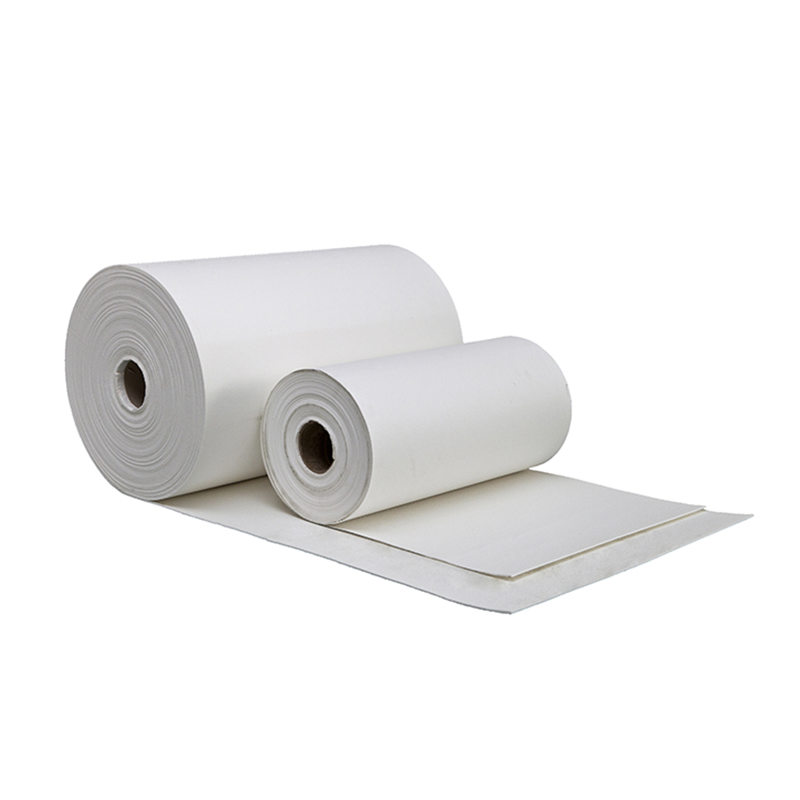
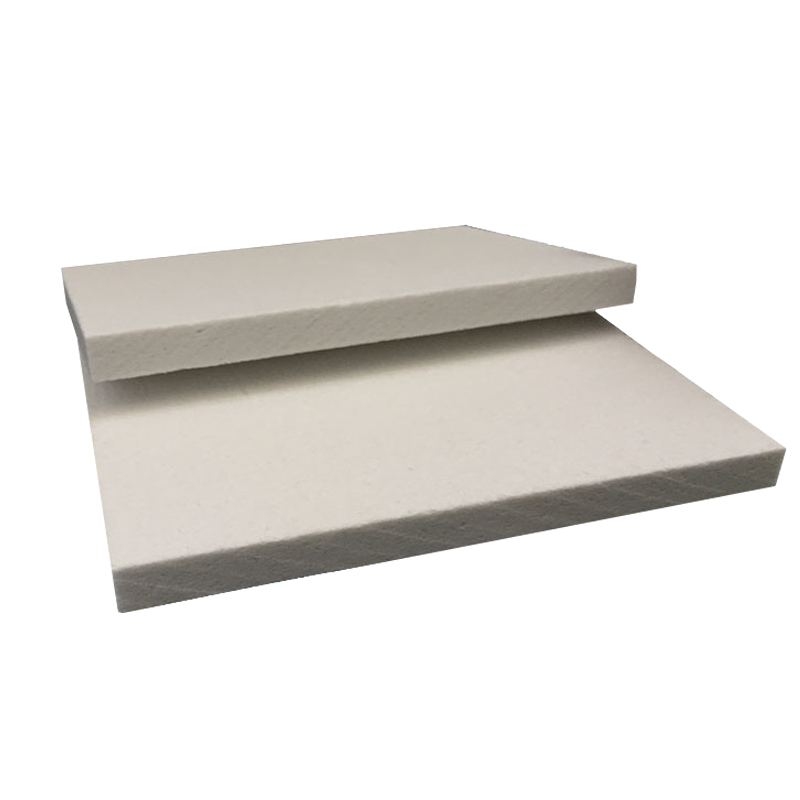

Specification
| Parameter | Value |
|---|---|
| Classification Temperature | 1260 °C / 1430 °C / 1600 °C |
| Bulk Density | 220–320 kg/m³ (standard); 320–450 kg/m³ (HD) |
| Standard Board Size | 600 × 300 mm, 600 × 600 mm, 1000 × 500 mm |
| Thickness Range | 10 mm – 100 mm (custom available) |
| Thermal Conductivity @ 600 °C | 0.12 – 0.18 W/(m·K) |
| Modulus of Rupture | ≥ 0.5 MPa (standard) / ≥ 0.8 MPa (HD) |
| Linear Shrinkage (24 h @ rated temp) | ≤ 2% |
| Al₂O₃ Content | 44–46% (standard) / 52–54% (high-alumina) / 40%+ZrO₂ (zirconia) |
| Color | White |
| MOQ | 1 pallet (~0.5 m³) |
Application
Ceramic fiber boards are widely adopted across temperature-intensive industries where energy efficiency and lining integrity are critical:
- Box & muffle furnaces: hot-face panels for walls, roofs, and doors in lab and industrial electric furnaces up to 1600 °C
- Kiln car decks & dividers: lightweight replacements for heavy insulating brick, reducing car weight and cycle time
- Combustion chambers: flame-impingement-resistant boards used in gas-fired and oxy-fuel burner blocks
- Heat treatment furnaces: annealing, normalizing, and tempering lines in the steel and aluminum industries
- Glass tank superstructure: backup insulation behind silica brick crowns
- Vacuum furnaces: inner-shell boards that withstand rapid cool-down cycles without cracking
- Expansion joints: compressible board strips between rigid refractory sections
Advantage
- Low thermal mass: heats up fast, reducing energy wasted on structure rather than process — particularly valuable in intermittent kilns
- Stable hot-face: rigid surface resists gas-flow erosion that degrade softer blanket linings over time
- Machinability: boards can be cut, drilled, or routed on-site with standard woodworking tools — no special equipment required
- Consistent density: vacuum-forming ensures uniform insulating properties corner-to-corner; no soft spots
- Chemical resistance: alumina-silica matrix is inert to most flue gases, molten glass, and non-ferrous metal splashes
- Thermal shock tolerance: high porosity absorbs differential expansion stress, surviving rapid heat-up/cool-down without delamination
- Long service life: field data from kiln operators typically shows 3–5× longer campaigns compared to castable linings of equivalent thickness