
E-mail: ncjt@zjncjt.com


A furnace lining rarely fails because the furnace reached an impossible temperature. It usually fails because the refractory material was selected for the wrong mix of heat, chemistry, load, and thermal cycling. The symptoms are familiar: spalling on the hot face, open joints, corroded anchors, and a shell that quietly consumes gas or electricity for months.
Short answer: choose furnace refractory material by failure mode first, temperature second, and price third. Ceramic fiber and lightweight insulating firebrick cut heat loss and thermal mass. Dense firebrick and castables resist abrasion, slag, and mechanical load. The best lining is not the densest or the cheapest; it is the one that survives the actual cycle.
If the furnace cycles quickly, thermal shock resistance matters more than maximum temperature. If it holds molten metal or slag, chemical resistance and erosion resistance move to the top. If it runs continuously, heat loss and lining life dominate the return on investment. That logic is also visible in practical ceramic fiber blanket furnace lining decisions.
Content
Refractory material does three jobs at once: it contains heat, protects the steel shell and structure, and manages chemical and mechanical attack. A material that wins on temperature alone can still fail if it cannot handle thermal cycling, slag, or anchor movement.
Rapid heating or cooling opens cracks in dense brick. Fiber and lightweight brick tolerate cycling better.
Alkalis, iron oxide, slag, and reducing atmospheres can dissolve binders or form low-melting phases.
Dust, molten metal, and high-velocity gases require a hard, dense hot face.
Roofs and suspended walls need materials that keep shape under sustained heat and weight.
Thermal conductivity decides shell temperature, energy use, and the payback of added insulation.
For low-mass linings, ceramic fiber blankets are often the first candidate because they combine low thermal conductivity with excellent thermal shock resistance. They are not a universal hot face where slag or high-velocity dust is present, but they are strong in backup insulation, door linings, and cyclic furnaces.
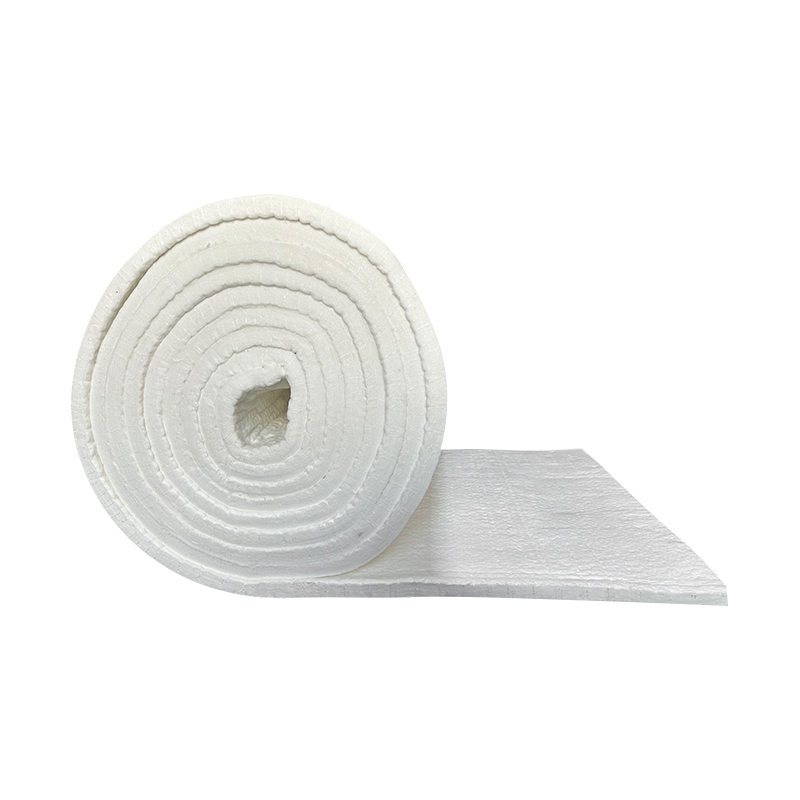 Ceramic Fiber BlanketsThe NC ceramic fiber blanket is made of special ceramic fiber through double needle-punching processing. The double needle-punching techniques improve the degree of fi...View Product →
At higher temperatures, alumina fiber board, polycrystalline mullite fiber, and lightweight insulating firebrick take over. For molten metal contact, dense firebrick, castables, and gunning mixes remain necessary despite higher heat loss.
Use the table as a screening tool, not a datasheet. Two suppliers can sell the same generic name with different fiber chemistry, shot content, binder, and density. Those details change real performance.
Two linings can share the same hot-face temperature and still produce very different energy bills. The hidden variables are thermal conductivity, lining thickness, thermal mass, and the number of heating cycles per day. A dense lining absorbs heat during ramp-up and releases it during cooling; a low-mass lining follows the process faster and cuts standby loss.
Dense firebrick 100
Lightweight IFB 58
Fiber blanket 32
Nano board 21
These index values are illustrative, but the pattern is real: low-mass insulation often pays back through faster cycles and lower shell temperature. For medium-temperature furnaces, lightweight insulating firebricks can reduce heat loss while still carrying moderate load.
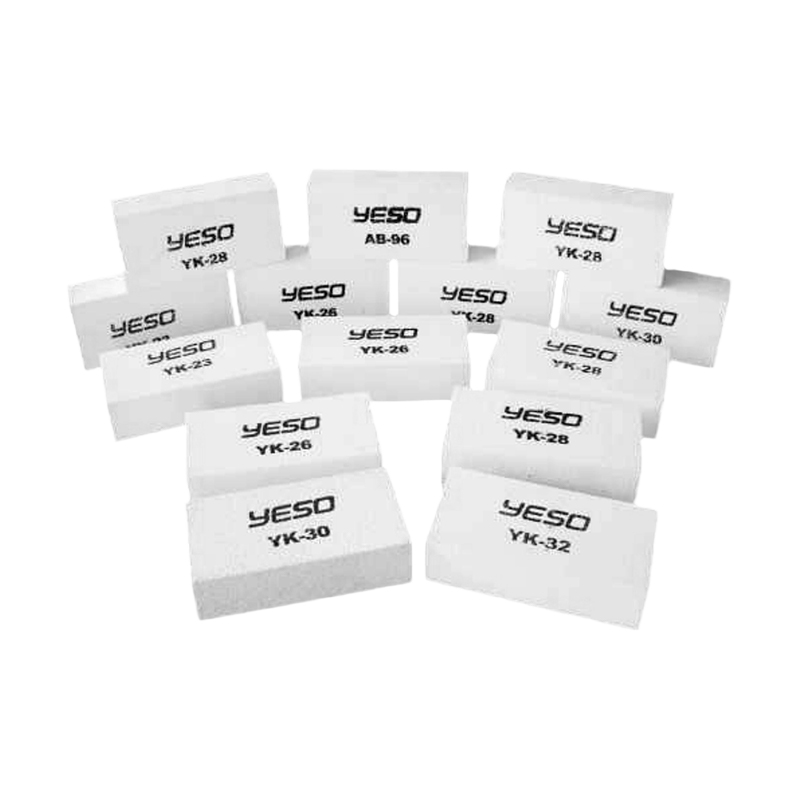 Lightweight Insulating Fire BricksLightweight Insulating Fire Bricks are made from high-purity refractory clay and alumina, with an appropriate amount of organic fillers added. These organic fillers ar...View Product →
Check the anchors, not just the insulation. A 20 mm thermal bridge at each anchor can undo much of the savings from a low-conductivity lining.
Furnace refractory material demand is not evenly spread. Iron and steel, glass, ceramics, nonferrous metals, and petrochemical processing consume most linings, but each sector stresses different properties.
Iron and steel: 42%
Glass: 18%
Ceramics: 15%
Nonferrous: 12%
Petrochemical: 8%
Other: 5%
For large furnace roofs and walls, ceramic fiber modules combine insulation and anchoring in one engineered assembly, which reduces installation labor and joint losses.
 Ceramic Fiber ModulesIntroduction The NC ceramic fiber module is made of a ceramic fiber blanket, which is folded or cut by experienced professional technicians. It uses special equipment ...View Product →
Glass furnaces favor dense, chemically resistant materials because molten glass is aggressive. Ceramic and heat-treating furnaces often favor fiber and lightweight brick because cycling dominates. Nonferrous melting needs a balance: enough density for metal contact, enough insulation for energy control.
The cheapest quote often has the highest lifetime cost. Run the selection as a short engineering project, not a catalog comparison.
Record maximum temperature, atmosphere, slag or dust, mechanical load, and cycle frequency.
Decide whether thermal shock, chemical attack, abrasion, creep, or heat loss is the dominant risk.
Compare shell temperature and annual energy cost for dense, lightweight, and fiber-lined options.
Match the refractory to slag, metal, and gas composition; ask for corrosion test data where available.
Spacing, alloy, ceramic cups, and expansion joints decide whether a good material stays in place.
Control heating rates, hold points, and inspection records before the furnace returns to service.
Use a simple payback check: estimate heat loss through the lining, convert it to annual energy cost, and compare that with the installed cost difference. A higher-grade insulation that costs 20% more but cuts heat loss by 30% can pay back in months on a continuous furnace. On a laboratory furnace that runs twice a week, the same upgrade may take years; prioritize temperature control and thermal shock instead.
Refractory life is usually decided by maintenance discipline, not by the first purchase. Keep a lining map, record hot-face thickness, shell temperature, and repair history for each zone. After every major shutdown, inspect anchors, expansion joints, and door seals.
Compliance is mostly documentation. If a supplier claims ISO 9001 or CE, ask for the certificate scope and the test standard behind key data such as classification temperature, thermal conductivity, and chemical composition. For critical furnaces, require material test certificates and a written dryout procedure. For installation questions, the site's technical support channel can help clarify anchor spacing, expansion allowances, and repair materials.
Furnace refractory material is not a commodity line item. It is a process decision that controls shell temperature, cycle time, maintenance intervals, and safety. Match the material to the failure mode, verify the data behind the label, and inspect what you install. That approach usually beats chasing the lowest price per square meter.
Introduction: Aluminum silicate fiberboard material is currently a high-performance insulation material. Aluminum silicate fiberboard has excellent properties such as light w...
Introduction: Aluminum silicate refractory fiber products are made by selective processing of pyroxene, high-temperature melting, blow molding into fibers, solidification mol...
Introduction: 1、 Shaped ceramic fiber furnace lining for high alumina ceramic fiber board The shaped ceramic fiber furnace lining of high alumina ceramic fiber board mai...

An enterprise integrating design, R&D, production, sales and engineering services. Ceramic Fiber Board Manufacturers, Vacuum Heat Treatment Solutions in China
Phone: +86-13967261180
+86-17858398898
Email: ncjt@zjncjt.com
Arlen@zjncjt.com
Tel: +86-572-8295956
Add: Wulintou, Tangbei Village, Leidian Town, Deqing Country, Huzhou City, Zhejiang Province, China
Copyright © 2024 Zhejiang Nengcheng Crystal Fiber Co., Ltd. All Rights Reserved.

 English
 Español
 عربى
عربى