
E-mail: ncjt@zjncjt.com


A furnace lining rarely fails all at once. It starts with hairline cracks noticed during a routine walk-around, a shell temperature that runs a few degrees hotter than last quarter, and an energy bill that creeps upward month after month. Fire brick is the material standing between those early warnings and an expensive mid-campaign stop. Choosing the right grade is one of the highest-leverage decisions a plant operator makes.
Fire brick, also called refractory brick, is a ceramic block engineered to withstand high temperature, resist chemical attack, and hold its shape under thermal load. Unlike ordinary building brick, it is fired at much higher temperatures and formulated with controlled alumina and silica content so it does not soften, crack, or waste heat in furnace environments that routinely exceed 1200°C.
The short version: No single fire brick performs best in every application. For continuous furnaces above 1200°C, high-alumina dense brick protects the hot face while insulating fire brick (IFB) limits heat loss in the backup layer. For batch kilns that cycle daily, low-density IFB saves more energy than dense brick because it stores far less heat. Match the grade to the thermal and mechanical load, not just the maximum temperature rating.
Content
Fire brick manufacture starts with crushed raw materials — refractory clays, bauxite, kaolin, or fused alumina — blended with additives to control porosity and bond formation. The formed brick is dried and fired between 1300°C and 1500°C, sintering the particles into a strong ceramic bond. The alumina (Al2O3) content is the single most useful classification index when evaluating a grade for a specific furnace.
30–45% alumina with a service limit around 1300°C. Moderate cold crushing strength and good thermal shock resistance make it the workhorse for kiln linings, fireboxes, and flue ducts that do not see severe slag or alkali attack.
50–90% alumina with a service range of 1400°C to 1800°C. Higher refractoriness and load-bearing capacity suit cement kilns, incinerators, and high-temperature furnaces where mechanical stress accompanies intense heat.
35–60% alumina with 55–80% apparent porosity and a density of 0.5–1.2 g/cm³. Service range is 1100°C to 1600°C depending on grade. Low thermal conductivity and low heat storage make IFB the standard choice for backup insulation and lightweight furnace construction.
For furnace builders and maintenance engineers, insulating fire brick bridges the gap between dense refractory and ceramic fiber: it is rigid enough to support load, yet light enough to cut heat loss dramatically without adding excess thermal mass to the structure.
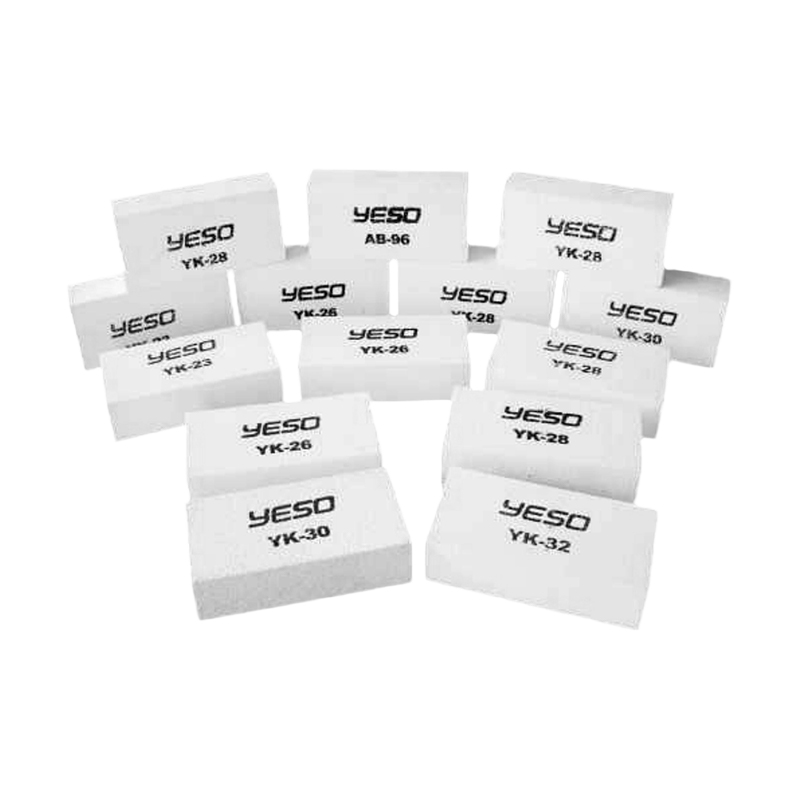 Lightweight Insulating Fire Bricks for High-Temperature FurnacesThis product offers low thermal conductivity and low heat storage, making it ideal for reducing energy use in intermittently operated furnaces. It suits service temperatures up to 1550°C.View Product →
The table below summarizes the property ranges that matter most when choosing between fireclay, high-alumina, and insulating fire brick. Values represent typical commercial grades; always verify density, strength, and conductivity against the supplier's datasheet for the exact grade you plan to install.
Maximum temperature rating is the first number buyers look at, but it is rarely the number that decides lining life or energy cost. Two hidden indicators matter more: thermal conductivity and heat storage. A dense fire brick at 1000°C conducts 1.0–1.5 W/m·K; an insulating brick conducts roughly a quarter to a third of that. When the lining stores less heat, the furnace reaches process temperature faster and loses less energy during cooling cycles.
Figure 1. Relative heat stored per square meter of lining at 1000°C, normalized to high-alumina dense brick.
For a batch furnace cycled once per day, switching from a dense to an insulating backup lining can cut fuel consumption by 15–25% and noticeably shorten ramp time. For continuous furnaces, conductivity — not storage — dominates operating cost. Because ceramic fiber stores almost no heat, combining an IFB layer with a ceramic fiber hot face or backing layer gives the fastest thermal response of any fire brick alternative.
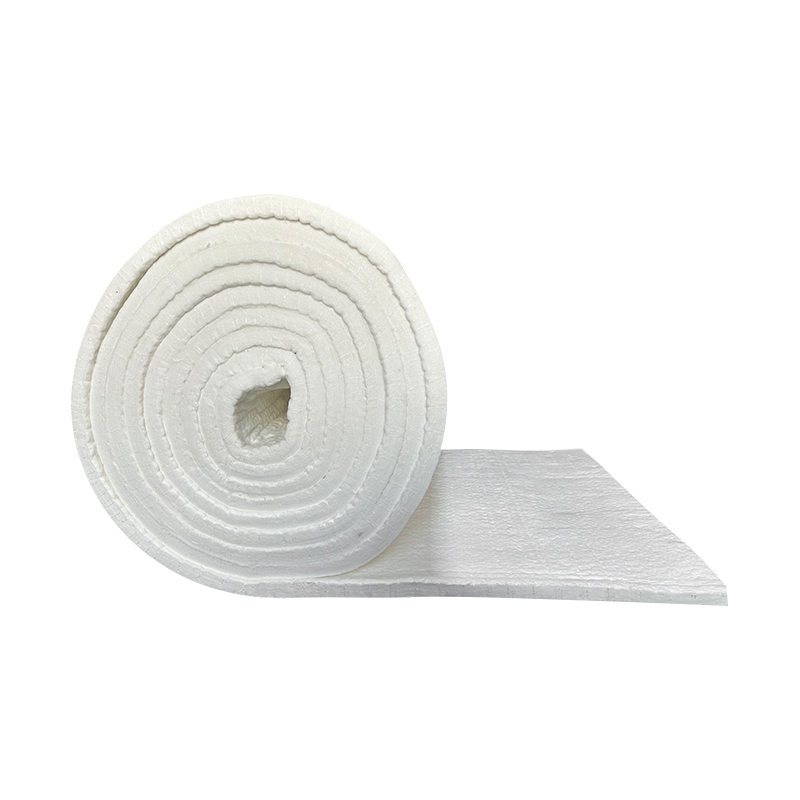 Ceramic Fiber Blanket with Double Needle-PunchingThis blanket provides excellent thermal insulation, chemical stability, and resistance to heat shock. It is suitable for furnace linings, pipe insulation, and sealing applications, with low thermal conductivity.View Product →
Refractory lining demand tracks high-temperature manufacturing. The estimated application distribution below reflects current consumption patterns across industrial sectors that rely on dense and insulating fire brick.
Ceramics and metallurgy dominate because both operate large, continuous furnaces where dense fireclay or high-alumina brick protects the hot face and IFB provides the backup layer. Glass and petrochemical plants tend to favor silica and high-alumina grades for chemical resistance, while electronics applications increasingly use lightweight IFB and fiber linings inside muffle and tube furnaces for precise thermal uniformity.
Choosing a refractory grade is a systematic process. Working through these steps with your supplier prevents the two most common failures — premature spalling and excessive shell heat loss.
Record the maximum process temperature at the hottest zone, including overload scenarios. Add 50–100°C safety margin above that figure before comparing brick temperature ratings.
Use dense brick for sprung arches, burner blocks, and slag-contact areas. Use insulating brick for self-supporting walls and roofs where structural load is minimal.
Alkali vapors and reducing atmospheres attack fireclay brick; high-alumina or silica grades resist better. Document the furnace atmosphere before finalizing your shortlist.
Decide between hot-face dense plus IFB backup versus all-IFB construction. For batch operation, favor lower thermal mass; for continuous operation, favor lower conductivity.
Compare density, cold crushing strength, permanent linear change (PLC), and thermal conductivity from datasheets — not just maximum temperature. Request test certificates for critical batches.
Verify tolerance class, wedge angles, and radius bricks against your furnace drawings. Dimensional mismatch is a leading cause of mortar joint failure in field installations.
For a deeper breakdown of IFB categories, service limits, and grading rules, refer to our insulating fire brick types and grades selection guide. When a lining must be thin but still achieve low shell temperatures, a nano microporous board placed behind the brick layer delivers the lowest conductivity per millimeter of thickness.
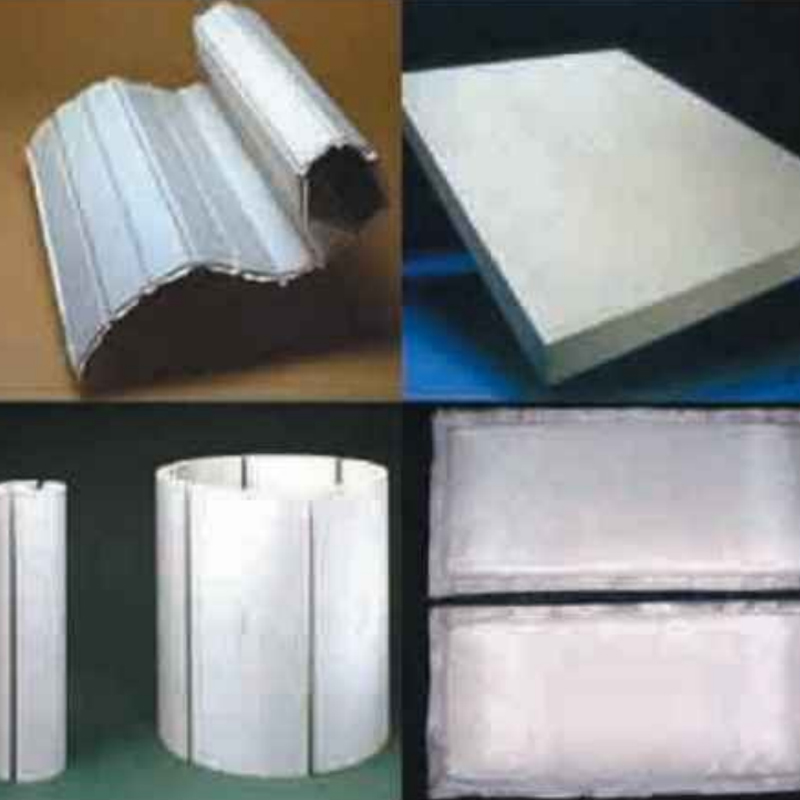 Nano Microporous Insulation Board for Compact LiningsThis board offers extremely low thermal conductivity per thickness, making it a high-performance alternative for thin insulation layers. It is commonly used in steel, petrochemical, and industrial furnace applications.View Product →
Even the correct fire brick grade will fail early if installed or operated incorrectly. Three practices make the biggest difference between a lining that lasts two years and one that lasts eight:
Procurement should reference applicable refractory standards: ASTM C155 for IFB classification, ISO 2245 for shaped insulating products, and the EN 1094 series for safety and performance testing. If the supplier declares ISO 9001 or CE quality management, ask for the certificate scope to confirm it covers the specific product family. A well-managed supplier can also provide thermal conductivity curves and PLC data per batch, which is the level of traceability serious furnace operators expect.
Before finalizing any lining specification, compare it with modern lightweight alternatives such as ceramic fiber modules and nano insulation — in some retrofit cases they outperform brick on energy and installation time. A practical starting point is our complete high-temperature thermal insulation buyer's guide, which covers multi-layer lining design and cost trade-offs across material families.
Introduction: Aluminum silicate fiberboard material is currently a high-performance insulation material. Aluminum silicate fiberboard has excellent properties such as light w...
Introduction: Aluminum silicate refractory fiber products are made by selective processing of pyroxene, high-temperature melting, blow molding into fibers, solidification mol...
Introduction: 1、 Shaped ceramic fiber furnace lining for high alumina ceramic fiber board The shaped ceramic fiber furnace lining of high alumina ceramic fiber board mai...

An enterprise integrating design, R&D, production, sales and engineering services. Ceramic Fiber Board Manufacturers, Vacuum Heat Treatment Solutions in China
Phone: +86-13967261180
+86-17858398898
Email: ncjt@zjncjt.com
Arlen@zjncjt.com
Tel: +86-572-8295956
Add: Wulintou, Tangbei Village, Leidian Town, Deqing Country, Huzhou City, Zhejiang Province, China
Copyright © 2024 Zhejiang Nengcheng Crystal Fiber Co., Ltd. All Rights Reserved.

 English
 Español
 عربى
عربى