
E-mail: ncjt@zjncjt.com


A 20-tonne Acheson graphitization furnace can hold full power for 24 to 40 hours and then need five to seven days of cooling before anyone opens it. Peak temperature is the headline number, but cost per tonne is decided by three quieter things: the furnace type, the condition of the insulation, and the shape of the power profile.
Two shops running the same 2800 °C schedule can differ by 30 percent in kilowatt-hours per tonne. The gap is usually not the transformer. It is compressed graphite felt, an oversized cooling loop, or a busbar sized for a shorter furnace.
The short version
Content
Graphitization is a solid-state rearrangement, not a melting step. In a coke or hard-carbon precursor, the graphene layers sit roughly parallel but misaligned, with an interlayer spacing near 3.44 Å. Hold the material above roughly 2200 °C and the layers rotate into registry. The spacing falls toward 3.354 Å, crystallite height grows, and the physical properties follow: electrical resistivity can drop by a factor of three to ten, thermal conductivity climbs, and sulfur, nitrogen and volatile metals leave the lattice.
That dual action, crystal ordering plus purification, is why one furnace type serves two markets. Battery anode producers buy the process for capacity and first-cycle efficiency. Electrode and recarburizer producers buy it for conductivity and ash content.
Below 2200 °C the layered order barely develops; between 2600 and 3000 °C the curve flattens while energy demand keeps rising. The commercial sweet spot usually sits where the specification is met, not at the highest number the furnace can survive.
Three families dominate: a resistance coke bed around the charge (Acheson), direct current passed through the workpieces connected in series (internal-serial), and graphite heating elements or tubes inside an insulated hot zone (box and vacuum designs). Current density, electrode wear and temperature uniformity differ sharply between them.
An open Acheson bed burns part of its own carbon packing. Vacuum or argon shielding protects graphite heaters, keeps oxygen away from the charge, and lets volatiles be pumped out instead of re-depositing on the product.
Graphite felt and rigid graphite board form the hot face, carbon-fiber-reinforced carbon takes the load-bearing duty, and alumina or mullite fiber with a microporous back-up layer protects the shell. Every millimeter of degraded hot-face material shows up as shell temperature.
Type C thermocouples reach roughly 2300 °C in clean, non-oxidizing conditions. Above that, two-colour pyrometers and sapphire fiber optics are the practical choices, and their sight paths must stay free of tar and metal vapor.
For pilot work, purification studies and small C/C composite parts, a graphite-heated vacuum chamber is the usual entry point, since it combines a controlled atmosphere with a measurable hot zone.
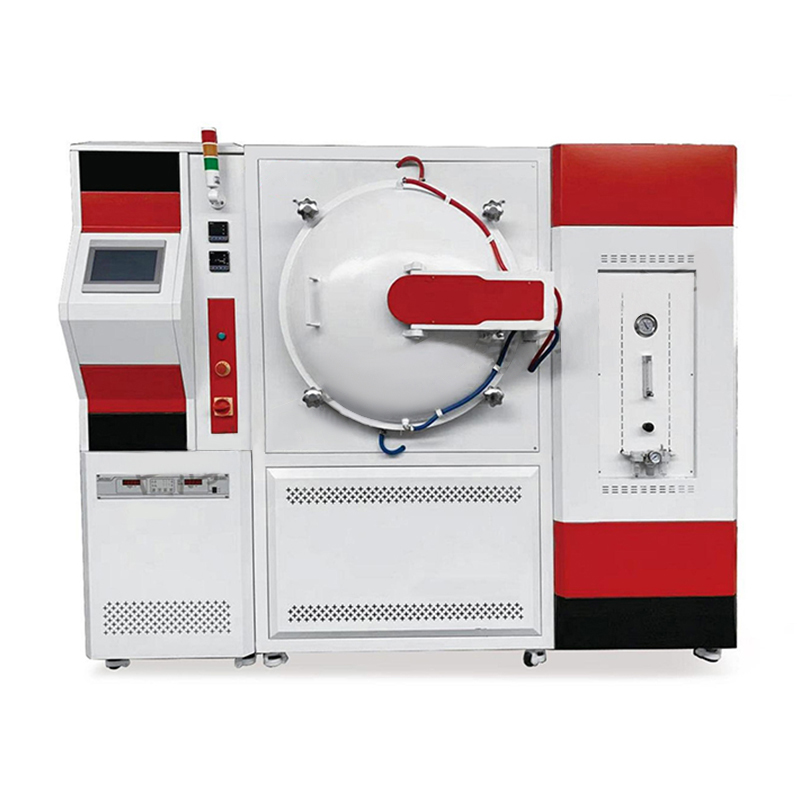 Vacuum Carbon Tube FurnaceThis vacuum carbon tube furnace is a high temperature, high vacuum resistance furnace with a graphite heating element. The maximum temperature can reach 2000°C-2300°C....View Product →
| Furnace type | Typical charge | Peak temperature | Cycle time | Energy per tonne | Best fit |
|---|---|---|---|---|---|
| Acheson | 10–60 t of powder or electrodes in a coke bed | 2500–3000 °C at the core | 5–15 days including cooling | 3500–5500 kWh | Large-volume anode and recarburizer output where capital cost matters more than efficiency |
| Internal-serial | Electrode columns connected in series | 2800–3000 °C | 2–5 days | 2800–3800 kWh | Large-diameter graphite electrodes needing uniformity and lower electrode loss |
| Box-type | Powder in saggers or trays, 1–10 t | 2500–3000 °C | 2–6 days | 3000–4500 kWh | Battery anode material in small and medium batches with tight contamination control |
| Continuous | Powder fed through a heated channel | 2400–3000 °C | Continuous, hours of residence | 2500–3500 kWh | High-volume anode lines with stable grades and steady feed quality |
| Vacuum or atmosphere graphite furnace | 1 kg–1 t with graphite heaters | 2000–3000 °C | 6–36 hours | Not comparable, small-batch duty | Pilot runs, purification, C/C composites, research samples |
Meter data from batch cycles rarely matches the sales brochure. In a well-run Acheson or box furnace, the useful heating work is a minority of the input energy, and the single largest recoverable loss is the heat carried out with the cooling water and the radiation during the long cool-down.
Indicative energy split in a batch graphitization cycle
A few numbers worth tracking that rarely appear on a specification sheet:
Demand is no longer dominated by steel alone. Lithium-ion anode material has absorbed the largest share of new furnace builds, and that shift changed what buyers ask for: tighter contamination limits, controlled atmospheres, and batch records that survive an audit.
The specialty segment is small in tonnes but demanding in equipment: vacuum tightness, partial-pressure control, and hot-zone materials that do not shed particles onto the work. That is the same logic used for vacuum furnace insulation choices, where the hot zone is designed around outgassing, not just temperature.
Start from the product specification and work backwards to the furnace, not the other way around. A 2600 °C schedule and a 2900 °C schedule can share a furnace but not an operating cost, and a purity claim of 50 ppm ash usually rules out an open coke bed entirely.
On payback, the arithmetic is blunt. Anode graphitization commonly consumes 2500 to 4500 kWh per tonne depending on furnace type. At an industrial tariff of 0.08 USD per kWh, that is 200 to 360 USD per tonne in electricity alone, so shaving 15 to 25 percent off shell and cooling losses pays back an insulation upgrade in roughly 6 to 14 months on a busy line. If your process chain begins with binder-containing green bodies, the upstream step sets the density the graphitization cycle inherits.
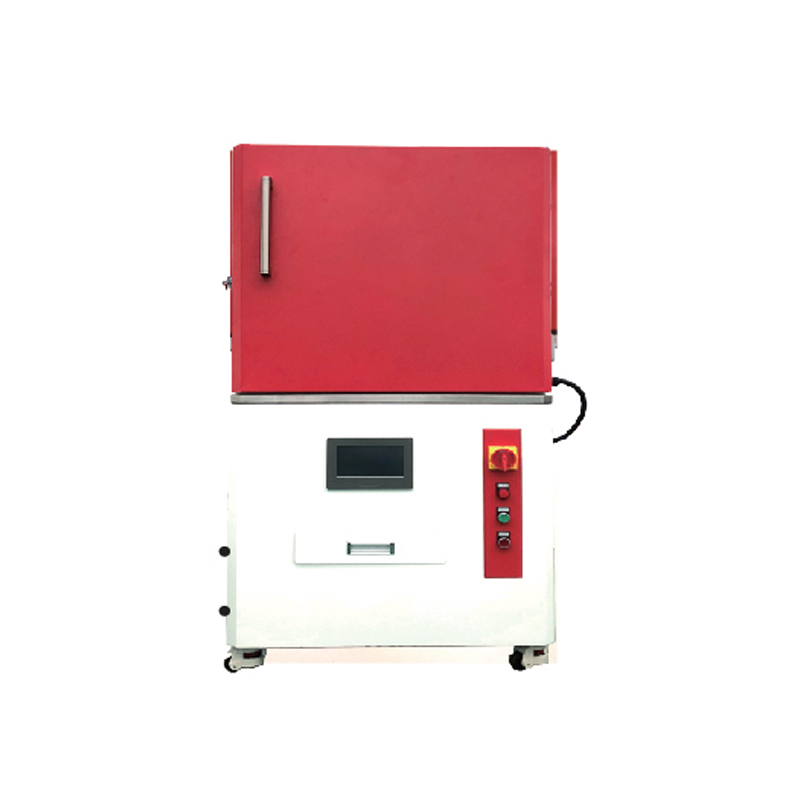 High Temperature Debinding and Sintering FurnaceOur high-temperature debinding furnace is a cycle-operating furnace developed by our factory based on the digestion and absorption of similar international products. D...View Product →
Most furnace problems announce themselves as slow drift rather than sudden failure. Track three indicators every campaign: shell temperature at fixed points, cooling water outlet temperature at fixed power, and the time needed to reach the set point. A 20 °C rise in shell temperature across two campaigns is a lining conversation, not a sensor fault.
Replacement of graphite felt and rigid insulation is normally driven by compression, contamination from metal vapor, and handling damage during loading. Where the hot face sits in the 1300 to 1600 °C range, alumina or mullite fiber and a microporous back-up layer behind the graphite do the heavy lifting for the cold face. The general logic of matching insulation to furnace atmosphere and temperature is covered in this vacuum furnace insulation materials guide, and the same selection rules apply when a graphitization hot zone is rebuilt.
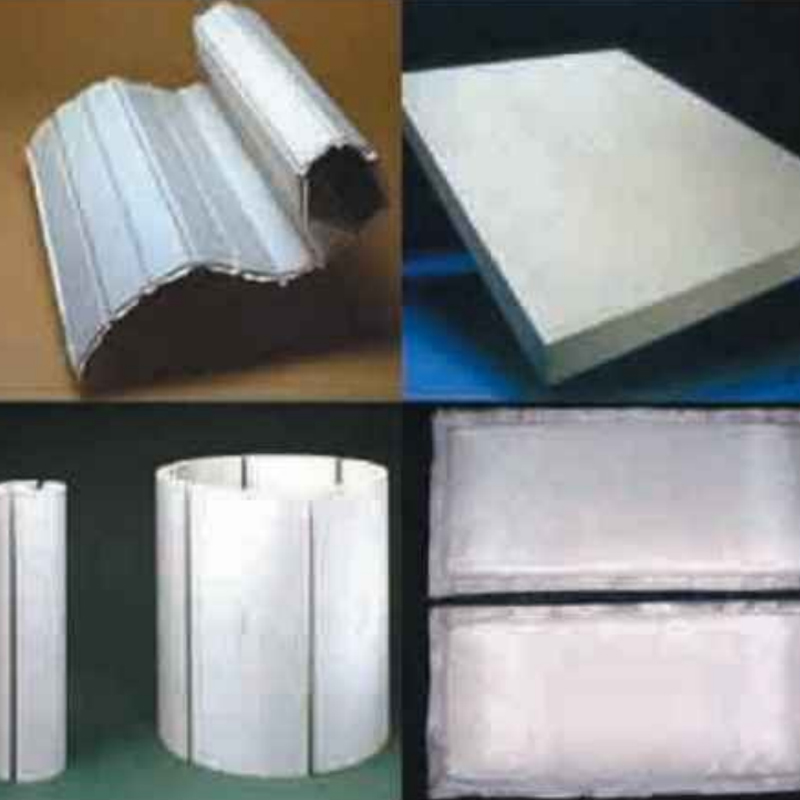 Nano Microporous Insulation BoardNano-insulation composite materials are made by combining nanoporous materials with heat-shielding materials through a special process. Their thermal conductivity is o...View Product →
Compliance is where new capacity most often stalls. Off-gas from graphitization carries sulfur dioxide, carbon monoxide, tar mist and fine carbon particulate, so the extraction and abatement design usually needs to be approved before the furnace is even ordered. Water-cooling circuits are typically closed-loop with leak detection, and high-current sections require the usual arc-flash boundaries, insulated tools and thermal imaging as part of a scheduled routine. Suppliers claiming ISO 9001 or CE conformity should be able to show certificate numbers and scope, since the scope often covers electrical safety rather than high-temperature performance.
If you take one idea from this page, take the sequencing. Match the furnace type to the product first, design the hot zone and insulation second, and only then negotiate the power supply against a realistic cycle. The peak temperature number is the easiest part of the specification to reach, and the easiest part to overpay for every day the furnace runs.
Introduction: Aluminum silicate fiberboard material is currently a high-performance insulation material. Aluminum silicate fiberboard has excellent properties such as light w...
Introduction: Aluminum silicate refractory fiber products are made by selective processing of pyroxene, high-temperature melting, blow molding into fibers, solidification mol...
Introduction: 1、 Shaped ceramic fiber furnace lining for high alumina ceramic fiber board The shaped ceramic fiber furnace lining of high alumina ceramic fiber board mai...

An enterprise integrating design, R&D, production, sales and engineering services. Ceramic Fiber Board Manufacturers, Vacuum Heat Treatment Solutions in China
Phone: +86-13967261180
+86-17858398898
Email: ncjt@zjncjt.com
Arlen@zjncjt.com
Tel: +86-572-8295956
Add: Wulintou, Tangbei Village, Leidian Town, Deqing Country, Huzhou City, Zhejiang Province, China
Copyright © 2024 Zhejiang Nengcheng Crystal Fiber Co., Ltd. All Rights Reserved.

 English
 Español
 عربى
عربى