
E-mail: ncjt@zjncjt.com


Content
The term "tube furnace" covers a broad spectrum of equipment — from compact benchtop research instruments used in university laboratories to large-diameter, high-throughput systems installed on production floors in metallurgy, ceramics, and chemical manufacturing facilities. While the fundamental operating principle is the same — heating a sample or material stream inside a cylindrical work tube surrounded by heating elements — an industrial tube furnace is engineered to different priorities than its laboratory counterpart.
Laboratory tube furnaces are optimized for precision, flexibility, and small-batch experimental work. Industrial tube furnaces prioritize throughput capacity, structural durability under continuous operation, and compatibility with the process volumes and material streams typical of manufacturing environments. Tube diameter, heating zone length, element material, thermal insulation specification, and the mechanical robustness of the furnace body are all scaled up and re-specified to meet these demands.
Understanding these distinctions is essential for engineers, procurement teams, and process designers evaluating industrial tube furnace options for specific production applications.
Industrial tube furnaces are available in several mechanical configurations, each suited to particular throughput requirements, material types, and process flow geometries.
Where laboratory tube furnaces typically work with tube diameters of 25–100 mm, industrial applications often require substantially larger bore diameters to accommodate bulk powder loads, large-format samples, or continuous material feed streams. Large-caliber tube furnaces maintain temperature uniformity across a wider cross-section — a more demanding engineering challenge than small-bore designs. The large-caliber tube furnace is designed for industrial-scale processing of bulk ceramic powders, metal components, and specialty materials that cannot be accommodated in standard laboratory tube formats.
Swing tube furnaces allow the tube to be repositioned or angled for different loading configurations, improving ergonomics and sample handling in production environments. The 1000°C large-diameter swing tube furnace combines a large working bore with operational flexibility, making it appropriate for industrial heat treatment of metal and ceramic components that require controlled loading angles.
Sliding tube furnace designs allow the heated furnace body to move along the tube rather than the tube being inserted into the furnace. This configuration is particularly useful for continuous or semi-continuous processing, where the heating zone can be advanced along a fixed tube containing the process material. It is also advantageous in situations where rapid quenching is required — the furnace body slides away from the sample, allowing immediate cooling. The 1200°C sliding tube furnace provides this operational flexibility at temperatures suitable for most industrial heat treatment processes.
For industrial powder processing applications — including catalyst production, battery material synthesis, and ceramic powder calcination — rotary tube furnaces that provide continuous material agitation during heating are the standard solution. The rotation ensures that all particles receive uniform thermal exposure, preventing hot spots, agglomeration, and non-uniform phase transformations. An adjustable tilt angle controls the rate at which powder moves through the heated zone, providing a practical means of regulating residence time and throughput. The 1200°C tiltable rotary tube furnace is suited for industrial powder heat treatment at medium-to-high production volumes.
Industrial tube furnaces serve as critical thermal processing equipment across several manufacturing sectors, each with distinct process requirements and material handling challenges.
Heat treatment of metal components — including annealing, normalizing, hardening, and stress relieving — represents one of the largest application areas for industrial tube furnaces. In metallurgical production, tube furnaces provide the controlled atmosphere environment necessary to prevent oxidation and decarburization of steel and non-ferrous alloys during high-temperature processing. The sealed tube environment with inert gas purging is particularly important for treating bright-finish components where surface quality after heat treatment is a commercial requirement.
Wire and strip annealing, where continuous lengths of metal must be drawn through a heated zone under controlled tension and atmosphere, is a well-established industrial tube furnace application. Tube furnace designs with appropriate bore diameter, heated zone length, and gas sealing at both ends are specified for these continuous production processes.
Ceramics manufacturing relies on tube furnaces for sintering — the process of heating ceramic powder compacts to temperatures below the melting point, causing particle bonding and densification. Industrial tube furnaces used for ceramic sintering must sustain temperatures of 1400°C–1700°C over extended cycle times while maintaining temperature uniformity within tight tolerances across the full length of the sample load. The ceramic tube material used in the work vessel must itself be compatible with sintering temperatures — high-purity alumina tubes are standard for these high-temperature ceramic processing applications.
Rotary tube furnace configurations are used in ceramic powder calcination — the thermal decomposition of precursor salts into oxide powders used in advanced ceramics, electronics, and catalyst manufacturing. The continuous material agitation provided by rotation ensures uniform calcination and prevents bridging or agglomeration within the tube.
In the chemical industry, industrial tube furnaces serve as thermal reactors for processes involving gas-solid reactions, pyrolysis, and catalyst activation. Fixed-bed catalyst reactors, where a packed bed of catalyst material is subjected to a controlled temperature profile with gas flow, replicate industrial reactor conditions at pilot scale in a tube furnace format. Calcination of zeolite catalysts, activation of hydroprocessing catalysts under hydrogen atmosphere, and thermal treatment of activated carbon are all common industrial tube furnace applications in the chemical sector.
The electronics industry uses industrial tube furnaces for thermal oxidation of silicon wafers, diffusion processes in semiconductor device fabrication, and the sintering of thick-film pastes on ceramic substrates. At a larger scale, tube furnaces are used in the production of carbon fibers — where precursor polyacrylonitrile (PAN) fiber is drawn through a series of oxidation and carbonization furnace zones — and in the synthesis of technical ceramic powders for electronic components.
The engineering requirements for industrial tube furnaces are substantially more demanding than for laboratory units. Key component areas where industrial specifications differ are heating elements, thermal insulation, and tube materials.
Industrial tube furnaces operating above 1000°C typically use silicon carbide (SiC) or molybdenum disilicide (MoSi₂) heating elements, depending on the required maximum temperature and atmosphere compatibility.
Element selection must also account for atmosphere compatibility: in strongly reducing atmospheres, MoSi₂ elements require protective measures, while in pure oxidizing atmospheres they perform reliably up to their rated maximum temperatures.
Industrial tube furnaces are lined with high-performance thermal insulation materials — typically ceramic fiber boards, alumina fiber modules, or polycrystalline mullite fiber products — to minimize heat loss through the furnace shell and reduce energy consumption per unit of production. In industrial operation, where furnaces may run continuously for weeks or months, the energy efficiency contribution of high-quality insulation is substantial. Effective insulation also reduces the external surface temperature of the furnace, improving workplace safety for operating personnel.
The work tube material must withstand the process temperature, resist the process atmosphere, and remain chemically inert relative to the sample material. Common industrial work tube materials include high-purity alumina (suitable to approximately 1700°C in oxidizing and inert atmospheres), mullite (good thermal shock resistance for cycling applications), and reaction-bonded silicon carbide (for aggressive chemical environments). Tube wall thickness is increased relative to laboratory specifications to provide additional structural strength under the mechanical stresses of continuous industrial operation.
Research processes that have been validated in a laboratory tube furnace are frequently scaled up to industrial production volumes. This transition introduces several engineering considerations that differ from the laboratory configuration:
| Parameter | Laboratory Tube Furnace | Industrial Tube Furnace |
|---|---|---|
| Tube diameter | 25–100 mm typical | 100–500+ mm depending on application |
| Heated zone length | 100–600 mm typical | 500 mm to several meters |
| Operating cycle | Batch, intermittent | Continuous or high-frequency batch |
| Temperature uniformity requirement | ±5°C across hot zone | ±5–15°C depending on process tolerance |
| Element type | SiC or MoSi₂, smaller cross-section | SiC or MoSi₂, industrial-grade rated for long-cycle duty |
| Insulation specification | Standard ceramic fiber | High-density fiber board or module systems for continuous operation |
A critical consideration in scale-up is that the thermal mass of the larger tube and larger sample load will alter heating and cooling rates. Process parameters established at laboratory scale — ramp rates, hold times, and cool-down profiles — must be re-validated at industrial scale rather than assumed to transfer directly.
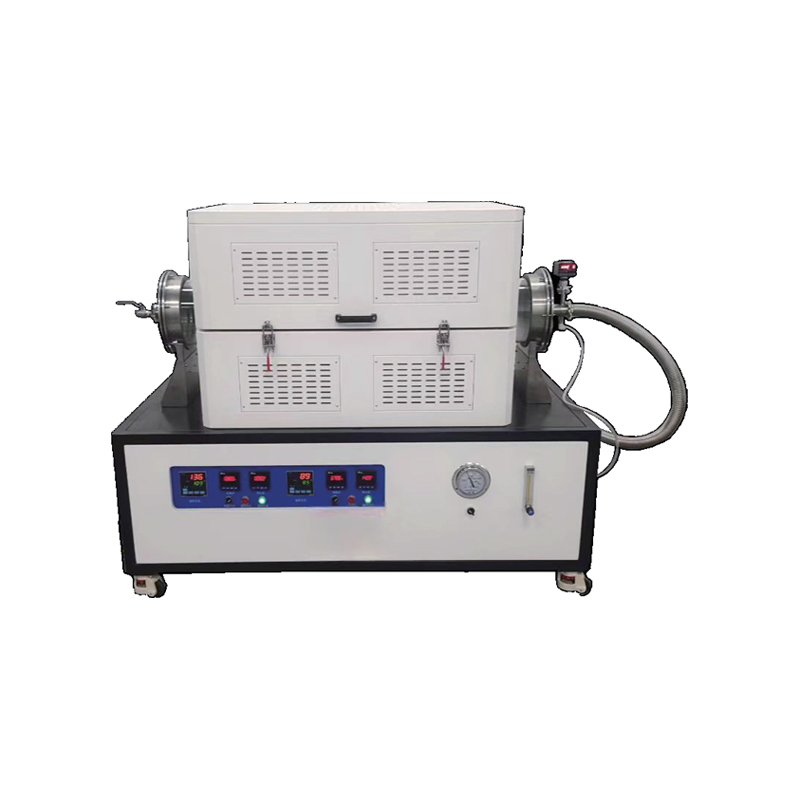
Specifying the right industrial tube furnace requires a structured evaluation of process and operational requirements. The following criteria should be assessed before finalizing a furnace selection:
Explore the full range of industrial furnace products, including tube furnaces, vacuum electric furnaces, and muffle furnaces, to identify the configuration that best matches your production requirements. For practical guidance on heat treatment process requirements across industrial sectors, the article on practical heat treatment solutions for industry provides relevant application context.
Introduction: Aluminum silicate fiberboard material is currently a high-performance insulation material. Aluminum silicate fiberboard has excellent properties such as light w...
Introduction: Aluminum silicate refractory fiber products are made by selective processing of pyroxene, high-temperature melting, blow molding into fibers, solidification mol...
Introduction: 1、 Shaped ceramic fiber furnace lining for high alumina ceramic fiber board The shaped ceramic fiber furnace lining of high alumina ceramic fiber board mai...

An enterprise integrating design, R&D, production, sales and engineering services. Ceramic Fiber Board Manufacturers, Vacuum Heat Treatment Solutions in China
Phone: +86-13967261180
+86-17858398898
Email: ncjt@zjncjt.com
Arlen@zjncjt.com
Tel: +86-572-8295956
Add: Wulintou, Tangbei Village, Leidian Town, Deqing Country, Huzhou City, Zhejiang Province, China
Copyright © 2024 Zhejiang Nengcheng Crystal Fiber Co., Ltd. All Rights Reserved.

 English
 Español
 عربى
عربى