
E-mail: ncjt@zjncjt.com


A 1200 °C batch furnace comes back online after a reline, and three weeks later the outer shell reads roughly 18 °C hotter than it did at commissioning. Nothing has failed. The burners, the control loop and the thermocouples are all behaving exactly as they did before. What changed is the lining: a dense course was replaced with a brick carrying a higher alumina figure, a higher cold crushing strength and roughly twice the thermal conductivity. On paper it looked like an upgrade. Inside the furnace it behaved like a downgrade, and the gas meter noticed long before the maintenance team did.
The short answer: a high alumina insulation brick is selected on three numbers that move together — Al2O3 content, bulk density and thermal conductivity — and the right brick is the lightest one that still holds its shape, its volume and its strength at your hot-face temperature. Alumina percentage on its own tells you very little about whether a lining will save energy or waste it.
What follows is a practical view of how these bricks behave in real furnaces: the grades that matter, the numbers that are usually missing from a quotation, and the checks that keep a reline from becoming a repeat purchase.
Content
A high alumina insulation brick is an alumina-silicate refractory, formed by semi-dry pressing or casting, that keeps a deliberately porous structure instead of being fired to full density. In catalogue terms, the useful grades sit between roughly 45% and 75% Al2O3, with bulk densities from about 0.6 to 1.4 g/cm3 and rated service temperatures from 1200 °C up to about 1500 °C. That places them in a different family from lightweight clay insulation bricks, which generally stop below 46% Al2O3, and from dense high alumina bricks, which run 2.4 to 2.8 g/cm3 and are engineered to resist load and abrasion rather than to hold heat inside the furnace.
The porous structure is the product. Porosity in these bricks commonly runs from 45% to 70%, and that void volume is what removes mass, lowers heat storage and slows conduction. A dense brick with the same alumina content is a structural material; a porous brick with the same alumina content is a thermal barrier. They are not interchangeable, and the specification sheet should make the distinction obvious before the order is placed.
45% to 75% in the insulating grades. It sets refractoriness, volume stability and resistance to slag attack — not insulation value.
0.6 to 1.4 g/cm3. This single figure drives heat storage, lining weight and how quickly the furnace responds to a setpoint change.
1200 °C to 1500 °C. The ceiling is set by the bond phase and by shrinkage behaviour, not by alumina content alone.
Typically 0.30 to 0.60 W/m·K at a 350 °C mean temperature. This is the number that shows up on the fuel bill every month.
Heat crosses an insulating brick through three parallel routes: solid conduction along the crystalline matrix, gas conduction and convection inside the pores, and radiation across the pore walls. Below about 800 °C, the solid and gas routes dominate, and porosity is what matters most. Above 1000 °C, radiation becomes a serious contributor, and then pore size matters as much as pore volume — a brick full of large open channels radiates heat quite efficiently, while a brick built from fine, largely closed pores scatters it.
That is why two bricks can both carry 60% Al2O3 and behave completely differently. Ask for conductivity at a defined mean temperature, and ask for the pore structure in the supplier's own words.
The table below reflects typical catalogue ranges for the four families most often quoted for the same furnace position. Treat the figures as orientation values and confirm them against a batch test report for the specific grade you are buying.
A quick word on grade names: suppliers use different labels for the same body, so it helps to check a reference on insulating fire brick types and grades before comparing two quotations line by line.
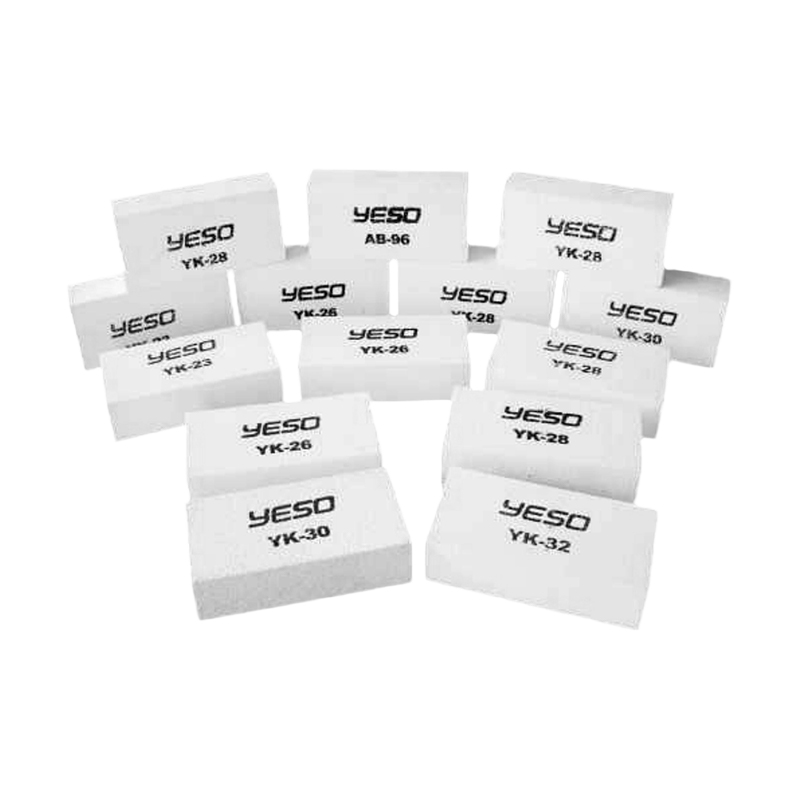 Lightweight Insulating Fire Bricks for High-Temperature Furnace LiningsAlumina-silicate bricks with uniform porosity and low thermal conductivity, rated for 900–1550°C service; verify reburning shrinkage and conductivity before comparing quotations.View Product →
Two metrics decide whether a lining survives three years or three months, and both are usually absent from a standard quote: the permanent linear change after reheating at the intended service temperature, and the conductivity value at a mean temperature close to the actual wall condition. A brick that shrinks 1% at 1400 °C opens its joints, and open joints leak heat and gas for the rest of the campaign.
The chart below indexes steady-state heat loss through a 300 mm lining with a 1200 °C hot face. Lower is better; the dense brick wall is the reference at 100.
The pattern is consistent: once the hot face is protected against shrinkage and chemical attack, the deciding factor is how little mass sits behind it. Note also that the gap between the mid and high grade insulation bricks is smaller than the gap between any insulation brick and the dense wall — a useful reminder when a supplier argues for a premium grade on alumina content alone.
Demand is concentrated where furnaces run continuously at 1100 °C to 1400 °C and where the shell must stay cool enough to protect the structure and the people around it. The distribution below reflects a typical mix across kiln and furnace building projects.
In glass and ceramics the brick usually sits as a hot-face course backed by a lighter insulation layer. In heat treatment it is more often used as an intermediate layer between a dense working lining and a fiber blanket. In incineration and chemical service, alkali and chloride attack make alumina content and low open porosity the priority over conductivity, because a failed hot face removes any thermal benefit within weeks.
Work through these steps in order. Skipping step three is the most common and the most expensive mistake.
On payback, run the arithmetic in kilowatt-hours rather than in brick price. Take a 4 m3 batch furnace at 1200 °C carrying around four tonnes of dense lining. Moving the hot-face course to a 1.0 to 1.1 g/cm3 insulation brick and backing it with fiber removes well over a tonne of lining mass. If that trims 45 minutes from each heat-up and the furnace runs two cycles a day, the energy saved per month is substantial relative to the modest premium on the brick. Payback inside one or two quarters is realistic in most tariff environments; the exact figure depends on your local energy price and cycle profile.
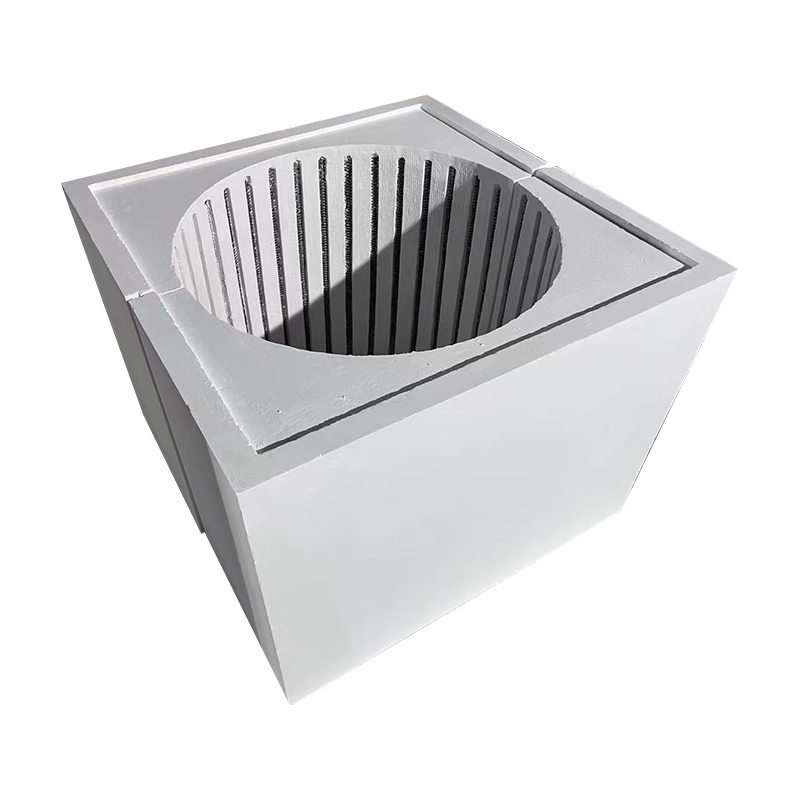 Ceramic Fiber Heating Module Block for Electric Resistance FurnacesFiber-based electric heating module with embedded resistance wire, usable to 1300°C and built for uniform furnace temperature, fast heating, and easy installation.View Product →
Most premature failures in insulation linings are installation problems rather than material problems. A few habits prevent the majority of them.
On compliance, ask for the quality system behind the certificate rather than the certificate alone — a supplier working to a recognised quality management system and, where relevant, a European conformity marking, will normally be able to supply batch-level test data on density, strength and reheating change. Disposal rules for spent refractory also vary by region; spent alumina-silicate material is generally handled as inert industrial waste, but confirm locally before a demolition campaign. If a lining problem needs a technical second opinion, the manufacturer's technical support channel is usually faster than an independent laboratory.
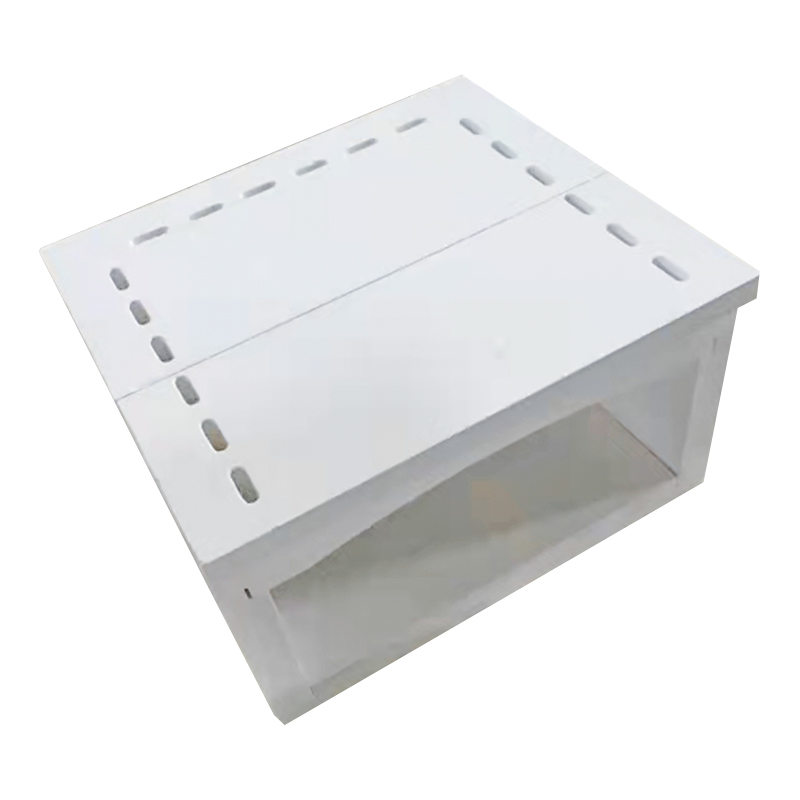 Compound Fiber Module Block for Industrial High-Temperature Furnace LiningsAll-fiber precast block with embedded anchors, low thermal conductivity, low heat capacity, and low density for high-temperature industrial furnace linings.View Product →
High alumina insulation brick is a simple product with a complicated purchasing decision behind it. The alumina figure sells the brick; the density, the conductivity curve and the reheating shrinkage decide whether the lining pays for itself. Get those three onto the quotation, insist on the layer design, and the next reline will show up in the energy report as a saving rather than as an 18 °C surprise on the shell.
Introduction: Aluminum silicate fiberboard material is currently a high-performance insulation material. Aluminum silicate fiberboard has excellent properties such as light w...
Introduction: Aluminum silicate refractory fiber products are made by selective processing of pyroxene, high-temperature melting, blow molding into fibers, solidification mol...
Introduction: 1、 Shaped ceramic fiber furnace lining for high alumina ceramic fiber board The shaped ceramic fiber furnace lining of high alumina ceramic fiber board mai...

An enterprise integrating design, R&D, production, sales and engineering services. Ceramic Fiber Board Manufacturers, Vacuum Heat Treatment Solutions in China
Phone: +86-13967261180
+86-17858398898
Email: ncjt@zjncjt.com
Arlen@zjncjt.com
Tel: +86-572-8295956
Add: Wulintou, Tangbei Village, Leidian Town, Deqing Country, Huzhou City, Zhejiang Province, China
Copyright © 2024 Zhejiang Nengcheng Crystal Fiber Co., Ltd. All Rights Reserved.

 English
 Español
 عربى
عربى