
E-mail: ncjt@zjncjt.com


Content
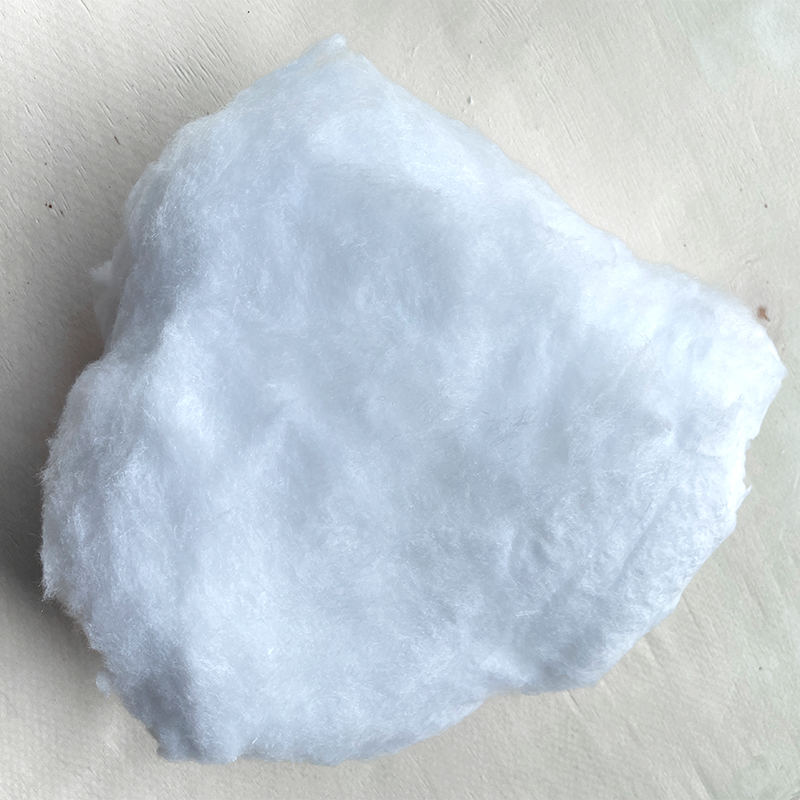
Ceramic fiber is a synthetic, inorganic insulation material made primarily from alumina (Al₂O₃) and silica (SiO₂), spun or blown into fine filaments that trap air and resist extremely high temperatures. It's sometimes called aluminum silicate fiber or refractory ceramic fiber, and it belongs to a broader family of man-made vitreous fibers that also includes glass wool and mineral wool.
What separates ceramic fiber from those relatives is composition and temperature capability. Glass fiber softens well below 1000°C, while standard ceramic fiber grades hold up in continuous service from 1260°C to 1430°C, and specialty formulations reach higher still. It's also distinct from asbestos, which it was largely developed to replace: ceramic fiber doesn't share asbestos's specific mineral structure, though like any fine fiber it still requires proper handling during installation.
Four characteristics explain why ceramic fiber has remained the default choice for high-temperature insulation across industrial equipment for decades:
These properties compound in practice. A furnace lined with ceramic fiber instead of dense brick heats up faster because less energy goes into warming the lining itself, and it survives more start-stop cycles before needing replacement. For a fuller picture of how ceramic fiber compares to other high-temperature options, our page on a full range of thermal insulation materials including ceramic fiber and nano microporous board breaks down conductivity and temperature ratings side by side.
Production starts by melting raw alumina and silica (along with other oxides depending on the target grade) at temperatures well above 1800°C. The molten stream is then fiberized, either by blowing it with high-pressure air jets or by spinning it against rapidly rotating wheels, both of which stretch the melt into fine, flexible filaments as it cools. The resulting loose fiber, sometimes called bulk fiber, is the raw input for nearly every downstream product form.
From there, the fiber is processed further depending on the intended product: needled into blanket, vacuum-formed into board or shapes, or chopped and mixed with a binder for moldable and coating applications. The processing step, not just the raw fiber chemistry, is what determines whether a batch becomes a flexible blanket or a rigid board.
Ceramic fiber isn't sold as a single product — it's a raw material platform that gets shaped into several distinct forms, each suited to different installation methods and structural demands.
| Product Form | Typical Use Case |
|---|---|
| Blanket / Wool | Flexible furnace and pipe lagging, wraps around irregular shapes |
| Board | Rigid furnace walls, kiln lining, structural insulation panels |
| Module | Prefabricated, anchor-mounted wall linings for fast furnace installation |
| Paper | Thin gasket and seal applications, electrical insulation backing |
| Rope / Cloth | Seals, expansion joints, protective sleeves and curtains |
Modules deserve a specific mention because they've become the standard for large furnace rebuilds. Rather than hand-packing loose blanket into place, crews install prefabricated ceramic fiber modules for furnace lining installation, which are compressed and pre-cut to standard dimensions, cutting installation time significantly compared to layered blanket systems.
Metallurgy and foundry operations are the largest consumers of ceramic fiber, lining ladles, tundishes, and furnace roofs where both heat resistance and light weight matter for structural design. Glass and ceramics manufacturing relies on it for kiln car linings and tunnel kiln insulation, where thermal cycling happens daily rather than occasionally.
Vacuum and atmosphere heat treatment furnaces, widely used for tool steel and alloy steel processing, depend on ceramic fiber's combination of low thermal mass and dimensional stability to maintain tight temperature control inside the chamber. Beyond heavy industry, ceramic fiber shows up in automotive catalytic converter packing, power generation boiler insulation, and fire-rated door cores — anywhere a design needs high-temperature protection without adding significant weight.
Not every ceramic fiber product is interchangeable, and picking the wrong grade usually shows up as premature shrinkage or lining failure well before the equipment's expected service life. Standard aluminosilicate fiber, roughly balanced between alumina and silica, covers most applications up to about 1260°C. Above that range, particularly for continuous service near 1400°C or higher, standard fiber begins to sinter and lose flexibility faster than the application can tolerate.
For those higher-temperature cases, polycrystalline mullite fiber cotton for higher-temperature applications extends usable service temperature by 200 to 400°C over standard glass-state ceramic fiber, which matters for vacuum furnaces, high-temperature kilns, and other equipment running at the upper end of industrial heat treatment. Matching fiber chemistry to actual operating temperature, rather than defaulting to the cheapest standard grade, is usually the difference between a lining that lasts years and one that needs early replacement.
Introduction: Aluminum silicate fiberboard material is currently a high-performance insulation material. Aluminum silicate fiberboard has excellent properties such as light w...
Introduction: Aluminum silicate refractory fiber products are made by selective processing of pyroxene, high-temperature melting, blow molding into fibers, solidification mol...
Introduction: 1、 Shaped ceramic fiber furnace lining for high alumina ceramic fiber board The shaped ceramic fiber furnace lining of high alumina ceramic fiber board mai...

An enterprise integrating design, R&D, production, sales and engineering services. Ceramic Fiber Board Manufacturers, Vacuum Heat Treatment Solutions in China
Phone: +86-13967261180
+86-17858398898
Email: ncjt@zjncjt.com
Arlen@zjncjt.com
Tel: +86-572-8295956
Add: Wulintou, Tangbei Village, Leidian Town, Deqing Country, Huzhou City, Zhejiang Province, China
Copyright © 2024 Zhejiang Nengcheng Crystal Fiber Co., Ltd. All Rights Reserved.

 English
 Español
 عربى
عربى