
E-mail: ncjt@zjncjt.com


A seven-zone mesh belt furnace running at 1120 °C can hold ±3 °C across the belt and still ship parts with inconsistent hardness, because the dew point in the delubrication zone drifted after the belt speed was raised. That is the nature of powder metallurgy: the furnace is not a box that gets hot, it is a chemical reactor with a conveyor attached.
The short answer: select a powder metallurgy furnace by the process window it must hold — delubrication profile, atmosphere quality, sintering temperature, cooling rate — and only then by chamber size or heating element type. A furnace that is 200 mm too short is an inconvenience. A furnace whose atmosphere control is one zone short is a scrap generator.
The conclusion up front
Content
Most sintering problems traced back to a furnace are not heating problems. They are transition problems between zones. Four duties matter:
Compacts typically carry 0.5–1.5 wt% lubricant. It must leave slowly enough that the part does not blister or leave carbon-rich soot behind. Ramp rate and dwell time matter more than the peak value here.
Surface oxides must be reduced before metallic contact can occur. This is where hydrogen content and dew point decide whether you get bonding or a discoloured part with weak necks.
Neck growth, pore rounding, and dimensional change all occur in this window. Holding time is a real variable: 10 extra minutes at temperature can move a dimensional tolerance more than a 5 °C change in setpoint.
Cooling rate sets microstructure and apparent hardness. A fast cool can replace part of a downstream heat treatment. A slow cool cannot, no matter what the datasheet implies.
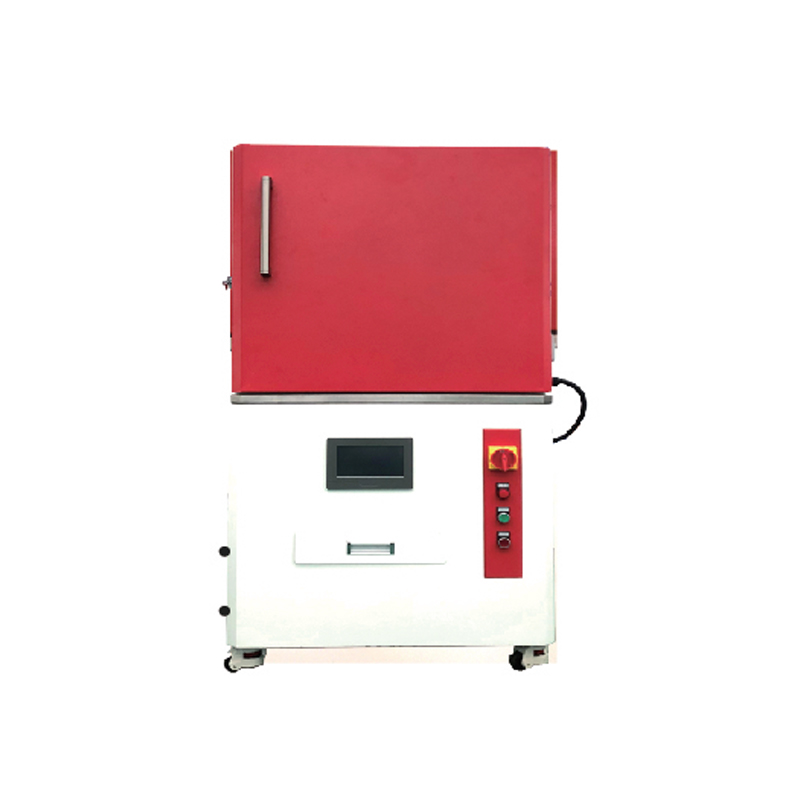 High Temperature Debinding and Sintering Furnace for CeramicsCycle-operated furnace for early-stage ceramic debinding, with 1200°C maximum, five-sided heating, and ±4°C uniformity; relevant when comparing cooling and element behavior.View Product →
Heating elements follow the temperature target rather than the marketing. Silicon carbide elements are comfortable in the 1000–1400 °C band in air; molybdenum disilicide elements take you toward 1700 °C and above, but they are sensitive to reducing atmospheres at low temperature and to moisture. If the furnace sits idle at 300 °C with wet gas inside, element life shortens for reasons that never appear on a specification sheet.
Buyers often compare furnace types by chamber volume. It is more useful to compare them by the failure mode each one invites.
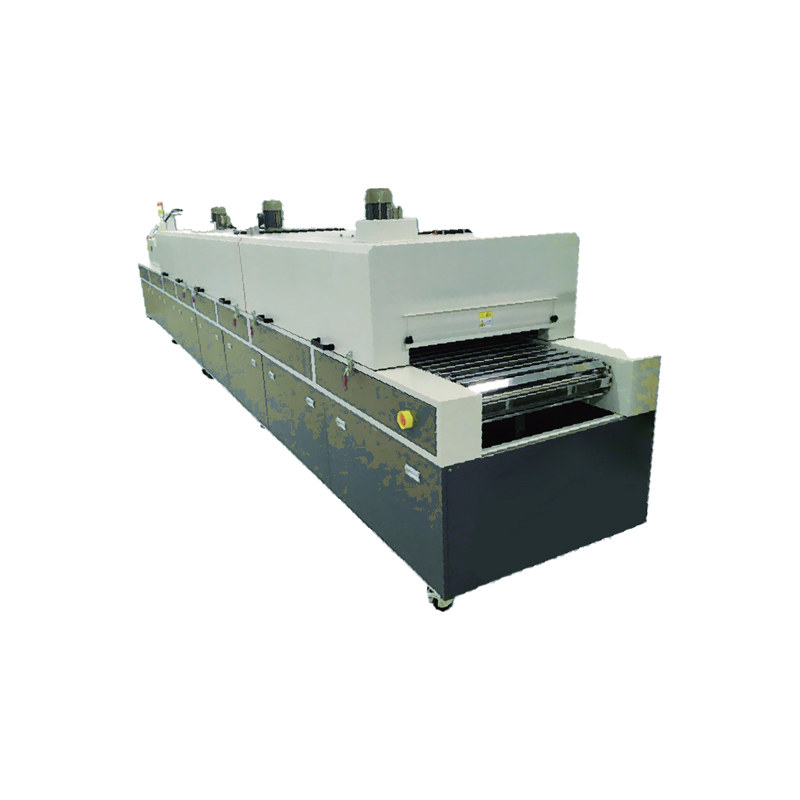 1100°C Mesh Belt Sintering FurnaceContinuous mesh-belt furnace for powder metallurgy sintering and electronic firing under protective atmosphere or air, with multiple models and heated sections for throughput checks.View Product →
A practical throughput check: a 300 mm belt moving at 100 mm/min gives roughly 6 m of active belt per hour of travel. Divide the heated length by that figure and you have minutes at temperature before you have any claim about capacity. Belt loading in kg per metre is the second limit, and it is usually stricter than the heating power.
Datasheets quote connected power. They rarely quote the split between useful heat and loss. For a mid-size continuous sintering furnace, a realistic distribution looks like this:
The 24% and 8% blocks are the ones an owner can act on. A ceramic fiber module lining with tight joints and a sealed shell reduces both, and the payback shows up in the kWh-per-tonne figure rather than in the setpoint. Lining shrinkage of 2–3% after the first thousand hours opens butt joints into visible gaps, and those gaps are hot spots before they are energy losses.
Two figures decide whether a powder metallurgy furnace will hold a process capability study: temperature uniformity and atmosphere quality. Ask for both as measured, not as designed.
If you are writing a purchase specification, the methodology behind a temperature uniformity survey in industrial furnace heat treatment is worth reading before you accept a supplier's single-number claim.
Powder metallurgy sintering capacity is concentrated where the part volume is: automotive first, general industry second. The application mix explains why cooling rate and atmosphere cleanliness get more attention than peak temperature.
Aerospace and medical work shifts the requirement from throughput to documentation: calibration records, survey reports, and traceable atmosphere logs. Electronics and energy parts often push toward vacuum or high-purity hydrogen, where the furnace is closer to a chemical vessel than an oven.
Alloy, green density, lubricant type and content, dimensional tolerance, and any post-sinter heat treatment. This is the only input that does not change later.
Delube ramp and dwell, sinter temperature and hold, cooling rate. Convert the profile into zone lengths before discussing chamber dimensions.
Belt width and load per metre from the part mix, not from the largest part you might one day run. Oversized belts lose heat every hour they run empty.
Gas mix, supply pressure, purge sequence, low-pressure alarms, and hydrogen detection. Interlocks are part of the process, not an accessory.
Factory acceptance with real compacts, a uniformity survey, a leak test, and a spare parts list including elements, thermocouples, and belt.
 MoSi2 Heating Elements for High-Temperature FurnacesOxidation-resistant resistance elements usable to 1800°C in oxidizing atmospheres and suited to ceramic, glass, metallurgy, and refractory furnaces; consider as aged-element spares.View Product →
Element spares deserve their own line item. Molybdenum disilicide elements age: resistance climbs, current falls, and the furnace slowly stops reaching setpoint. Replacing single elements in an aged set keeps the imbalance alive, so budget for a full set and record resistance at installation as a baseline.
Most powder metallurgy furnaces lose performance quietly. A short maintenance routine catches the drift before it reaches the parts:
For automotive work, heat treatment assessments such as CQI-9 and calibration requirements under IATF 16949 make records as important as the hardware. If your team handles maintenance in-house, drawing on a supplier's service and support for lining replacement, element matching, and survey scheduling usually costs less than an unplanned belt stoppage.
The practical takeaway is unglamorous: specify the thermal profile and the atmosphere, buy a lining that holds heat, accept the machine on a loaded belt, and then measure the same four numbers every quarter. Furnaces rarely fail suddenly. They drift, and the parts follow.
Introduction: Aluminum silicate fiberboard material is currently a high-performance insulation material. Aluminum silicate fiberboard has excellent properties such as light w...
Introduction: Aluminum silicate refractory fiber products are made by selective processing of pyroxene, high-temperature melting, blow molding into fibers, solidification mol...
Introduction: 1、 Shaped ceramic fiber furnace lining for high alumina ceramic fiber board The shaped ceramic fiber furnace lining of high alumina ceramic fiber board mai...

An enterprise integrating design, R&D, production, sales and engineering services. Ceramic Fiber Board Manufacturers, Vacuum Heat Treatment Solutions in China
Phone: +86-13967261180
+86-17858398898
Email: ncjt@zjncjt.com
Arlen@zjncjt.com
Tel: +86-572-8295956
Add: Wulintou, Tangbei Village, Leidian Town, Deqing Country, Huzhou City, Zhejiang Province, China
Copyright © 2024 Zhejiang Nengcheng Crystal Fiber Co., Ltd. All Rights Reserved.

 English
 Español
 عربى