
E-mail: ncjt@zjncjt.com


A production manager evaluating an industrial vacuum furnace usually starts with three questions: how hot can it go, how fast can it cycle, and what will it cost to run. Those questions are necessary, but they do not distinguish a reliable furnace from an expensive maintenance burden. The real differentiators are temperature uniformity, vacuum leak rate, and the hot-zone insulation system.
Content
A vacuum furnace heats components in a sealed chamber that is evacuated to a preset pressure before heating begins. The vacuum removes oxygen and reactive gases, which prevents oxidation, decarburization, and surface contamination. Depending on the process, the chamber is then backfilled with nitrogen, argon, or another controlled gas to support quenching or brazing.
The performance of the furnace depends on six key components. Their selection matters more than the brand name on the control panel.
Water-cooled double-wall structure with O-ring or metal seals. Leak tightness is measured in Pa-m3/s and directly affects surface quality.
Graphite, molybdenum, or tungsten elements set the maximum temperature and influence atmosphere compatibility. Each element type has a different service life.
Ceramic fiber modules, graphite felt, or metal radiation shields determine heat retention, cooling speed, and energy consumption.
Rotary vane, roots, and booster pumps work together to reach operating pressure quickly and maintain it throughout the cycle.
A fan and heat exchanger circulate inert gas to cool the load after heating. The circulation rate controls metallurgical results.
PLCs, temperature sensors, and vacuum gauges provide interlocks and data logging. Without traceable data, a modern heat-treatment qualification is difficult.
In the heating-element category, graphite is the most common choice for high-temperature vacuum sintering. For that class of work, a compact vacuum carbon tube furnace integrates a graphite hot zone with the necessary vacuum and cooling controls.
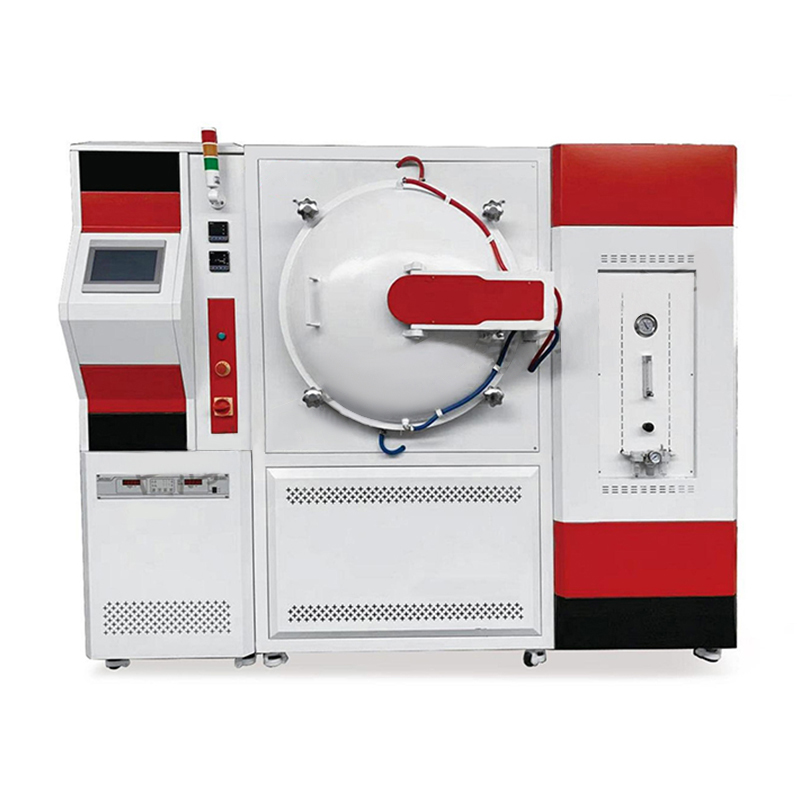 Vacuum Carbon Tube Furnace Manufacturers, Factory - Zhejiang Nengcheng Crystal FNengcheng is China Vacuum Carbon Tube Furnace Manufacturers and Factory, Custom Vacuum Carbon Tube Furnace for sale, This vacuum carbon t...View Product →
For a detailed explanation of the pumping sequence and pressure ranges, read the vacuum furnace basics guide.
The category “industrial vacuum furnace” includes several distinct platforms. The following comparison shows how typical configurations differ in temperature range and process focus.
Three numbers that are rarely quoted in a first proposal will determine whether the furnace can pass your quality audit.
Temperature uniformity is expressed as a spread across the work zone, usually measured after a temperature uniformity survey (TUS). A furnace can reach 1200°C and still fail to harden a load if the work zone varies by ±15°C. Aerospace-style requirements often ask for ±3°C to ±10°C depending on the material and sensor location.
Leak rate is measured in Pa-m3/s after the furnace has been pumped down. A standard industrial acceptance value is below 5 Pa-m3/s, while parts with very clean surface requirements may demand 1 Pa-m3/s or lower. A small leak will not always stop the furnace, but it will accelerate oxidation and increase the cost of consumables.
Gas quenching is a controlled cooling step. The maximum quench pressure, measured in bar, determines how fast a load can be cooled from austenitizing temperature. A 6-bar system is common for tool steel, while 10-bar to 20-bar systems are used for larger cross-sections and higher hardenability alloys.
Vacuum furnaces are used across metallurgical and ceramics industries. The distribution below is illustrative of a typical production vacuum furnace shop; your own mix will depend on process route and customer specifications.
Aerospace buyers usually require full AMS 2750 documentation and a furnace class statement. Tool-steel shops prioritize quench pressure and cooling rate. Automotive Tier 1 suppliers focus on cycle time and repeatability for high-volume batches.
For ultra-high-temperature work above 1600°C, a tungsten-wire vacuum furnace provides a clean metal hot zone with very low metallic contamination, which makes it useful for refractory-metal sintering and high-grade ceramic processing.
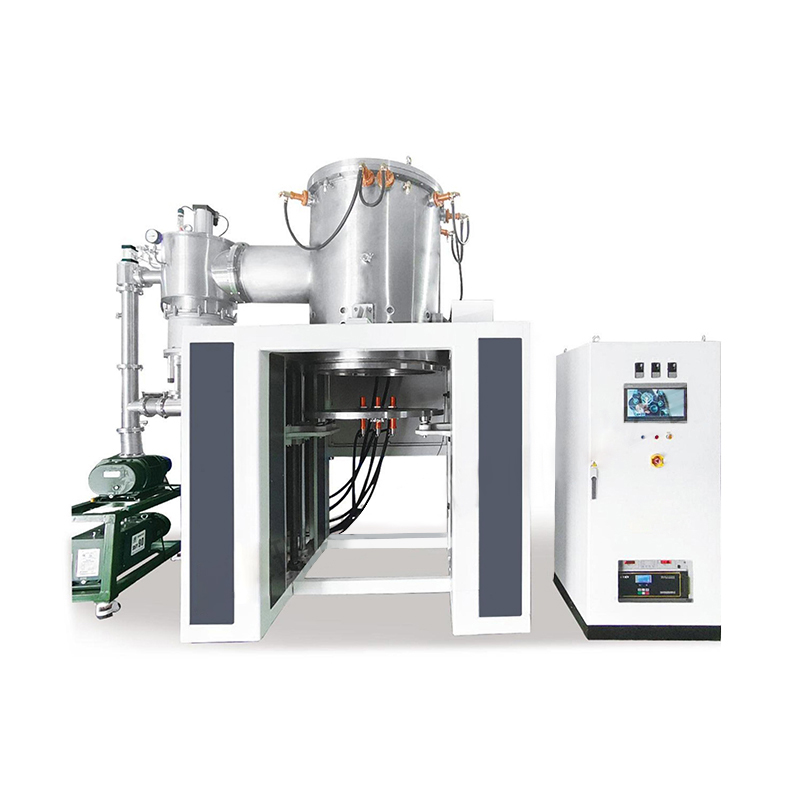 Vacuum Tungsten Wire Furnace Manufacturers, Factory - Zhejiang Nengcheng CrystalNengcheng is China Vacuum Tungsten Wire Furnace Manufacturers and Factory, Custom Vacuum Tungsten Wire Furnace for sale, This equipment h...View Product →
Use this sequence to compare proposals objectively and avoid a furnace that is technically impressive but commercially painful.
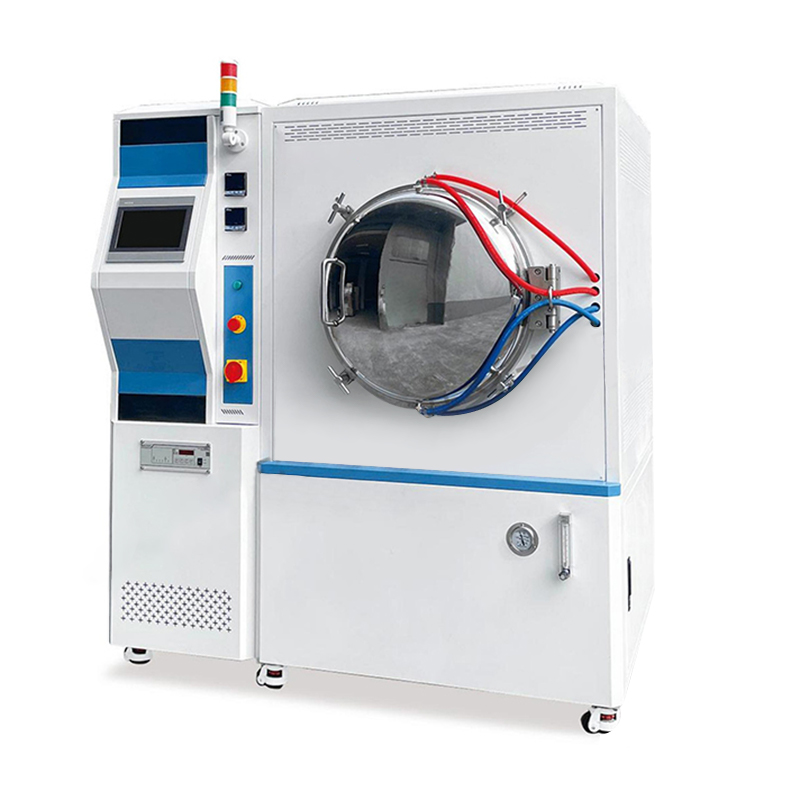 Vacuum Annealing Furnace Manufacturers, Factory - Zhejiang Nengcheng Crystal FibNengcheng is China Vacuum Annealing Furnace Manufacturers and Factory, Custom Vacuum Annealing Furnace for sale, This vacuum annealing fu...View Product → is the most direct route to clean metallurgical results.
An industrial vacuum furnace is a long-term asset only if the hot zone and vacuum system are managed carefully. These checks should be part of a quarterly plan.
If you are commissioning a new furnace or planning a hot-zone rebuild, contact our support team with your furnace drawings and process profile. A small design review before installation can often prevent large operating losses later.
Choosing an industrial vacuum furnace is ultimately a heat-transfer decision. Define the load, set the uniformity target, and insist on a hot-zone insulation package backed by maintenance documentation. The rest is engineering detail, and the detail decides your reject rate.
Introduction: Aluminum silicate fiberboard material is currently a high-performance insulation material. Aluminum silicate fiberboard has excellent properties such as light w...
Introduction: Aluminum silicate refractory fiber products are made by selective processing of pyroxene, high-temperature melting, blow molding into fibers, solidification mol...
Introduction: 1、 Shaped ceramic fiber furnace lining for high alumina ceramic fiber board The shaped ceramic fiber furnace lining of high alumina ceramic fiber board mai...

An enterprise integrating design, R&D, production, sales and engineering services. Ceramic Fiber Board Manufacturers, Vacuum Heat Treatment Solutions in China
Phone: +86-13967261180
+86-17858398898
Email: ncjt@zjncjt.com
Arlen@zjncjt.com
Tel: +86-572-8295956
Add: Wulintou, Tangbei Village, Leidian Town, Deqing Country, Huzhou City, Zhejiang Province, China
Copyright © 2024 Zhejiang Nengcheng Crystal Fiber Co., Ltd. All Rights Reserved.

 English
 Español
 عربى
عربى