



 English
 Español
 عربى
عربى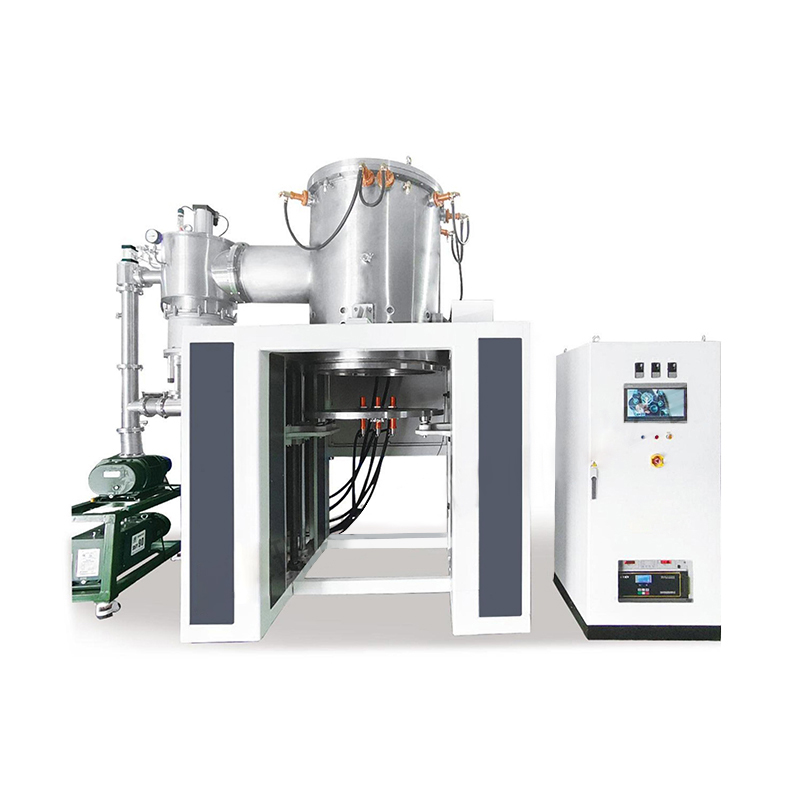
Vacuum Tungsten Wire Furnace
This equipment has a vertical structure and a round cavity structure, which can ensure high vacuum efficiency while also making the furnace resistant to deformation and durable. Multi-layer tungsten mesh annular heating ensures uniform heating, and multi-layer heat insulation screens keep the heat. The inner layer of the furnace shell is 310S stainless steel, and the outer layer is carbon steel. The two layers are cooled by circulating water, which has a long service life. It is widely used in sintering products of inorganic materials, metal compounds, ceramics, inorganic compounds, etc., in vacuum or protective atmosphere. It can also be used for heat treatment of metal materials in a vacuum or protective atmosphere for sintering preparation, and it can also be used for heat treatment of materials that require a clean sintering environment.


| Furnace tube size (MM) | Maximum temperature (°C) | Power(KW) | Voltage | Heating elements | Heating rate | Vacuum degree |
| φ100*100 | 2300°C | 35 | 380V | Tungsten Wire | 1-20°C/MIN | 6.67*10-4PA |
| φ200*200 | 52 | |||||
| φ300*300 | 125 | |||||
| φ400*400 | 280 | |||||
| φ500*500 | 450 |
-
A 20-tonne Acheson graphitization furnace can hold full power for 24 to 40 hours and then need five to seven days of cooling before anyone opens it. Peak temperature is the headline number, but cost per tonne is decided by three quieter things: the furnace type, the condition of the insulation, and the shape of the power profile. Two shops running the same 2800 °C schedule can differ by 30 percent in kilowatt-hours per tonne. The gap is usually not the transformer. It is compressed graphite fel...

