



 English
 Español
 عربى
عربى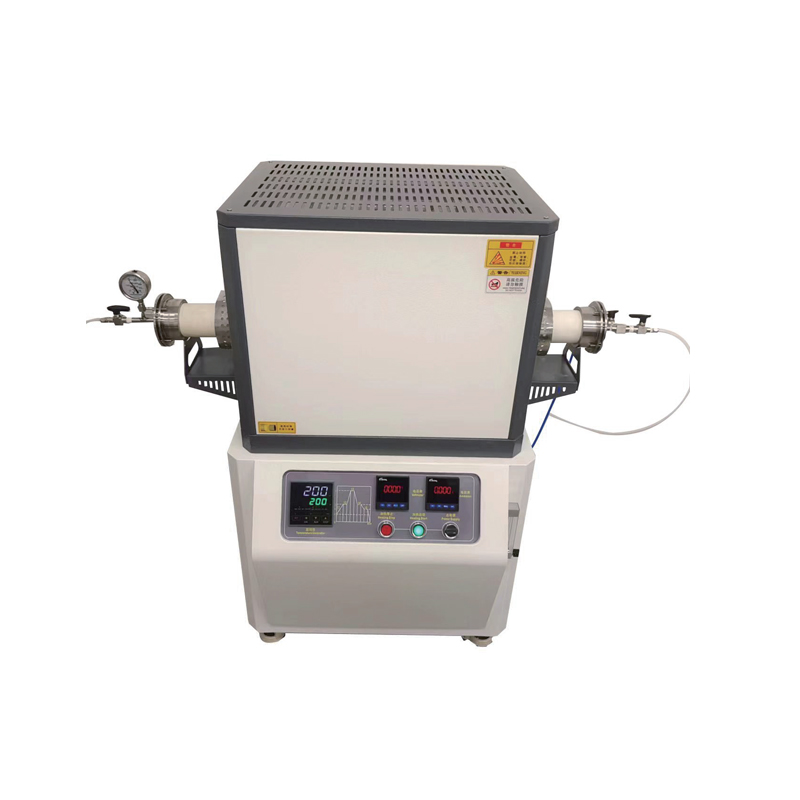
1700°C Tube Furnace
This tubular furnace can reach a maximum temperature of 1700°C. It features a double-shell structure and an air-cooling system. The furnace chamber is constructed of high-purity alumina fiber to minimize energy loss. The inner chamber surface is coated with a high-temperature alumina coating, which improves reflectivity and heating efficiency, extending the instrument's lifespan. It also includes overheat and burnout protection. The furnace offers advantages such as a balanced temperature field, low surface temperature, fast temperature ramp rates, and energy efficiency. It is ideal for universities, research institutes, and industrial and mining enterprises for sintering or annealing new material samples (under vacuum or inert gas protection).
Product Parameters:
· Maximum Operating Temperature: 1700°C (<0.5h)
· Continuous Operating Temperature: ≤1600°C
· Recommended Heating Rate: ≤10°C/min below 1400°C
· ≤5°C/min between 1400°C and 1600°C
· Heating Element: New process silicon-molybdenum rod
· Thermocouple: Type B
· Temperature Control Accuracy: ±1°C
· Temperature Control Method: Includes a Yudian intelligent temperature controller with PID control and auto-tuning, intelligent 30-50 programmable control, and over-temperature and burnout alarms.
· Certification Standards and Core Components: ISO9001 and CE Certification
· Core components include Chint and Schneider electrical components, UL-certified wire and cable, Japanese conductive materials, and Yudian and Eurotherm instruments.


| Specifications | Maximum temperature | Heating zone length | Corundum tube size | Rated power | Rated voltage | Dimensions | Weight |
| GL1700-S | 1700°C (<0.5h) | 170mm | ϕ50∘800mm | 2.5 KW | 220V | 850mm*420mm*670mm | About 55KG |
| ϕ60∘800mm | |||||||
| GL1700C | 1700°C (<0.5h) | 300mm | ϕ50∘1000mm | 6 KW | 220V | 1010mm*510mm*780mm | About 155KG |
| ϕ60∘1000mm | |||||||
| ϕ80∘1000mm | |||||||
| ϕ100∘1000mm |
-
A 20-tonne Acheson graphitization furnace can hold full power for 24 to 40 hours and then need five to seven days of cooling before anyone opens it. Peak temperature is the headline number, but cost per tonne is decided by three quieter things: the furnace type, the condition of the insulation, and the shape of the power profile. Two shops running the same 2800 °C schedule can differ by 30 percent in kilowatt-hours per tonne. The gap is usually not the transformer. It is compressed graphite fel...

