



 English
 Español
 عربى
عربى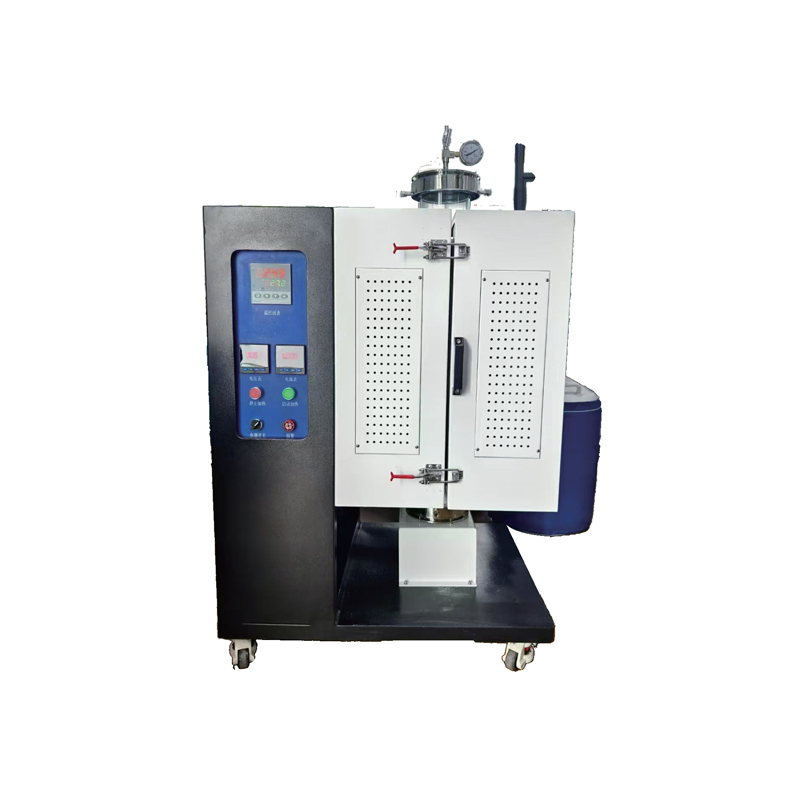
1200°C 1400°C 1700°C Vertical tube furnace
The equipment features mature technology, reliable quality, uniform temperature field, and reasonable structure. An optional LCD touch interface and detailed interface operation prompts make the operation of the equipment extremely simple and convenient. Various technical parameters and temperature curves are clearly visible, putting the operation status of the entire experiment under your control. The equipment is widely used in new materials and new processes such as semiconductor nanomaterials, carbon fiber, and graphene; and in experimental environments that require high heating temperatures, such as vacuum or atmosphere sintering and substrate coating.


Product Information
| Specifications | Maximum temperature | Operating temperature | Quartz tube size | Rated power | Rated voltage | Into the atmosphere | Heating element |
| SLG1200-60 | 1200℃ | 1100℃ | Quartz tube 60*1000 | 3KW | 220V | Inert or reducing | resistance wire |
| SLG1200-80 | Quartz tube 80*1000 | ||||||
| SLG1200-100 | Quartz tube 100*1000 | ||||||
| SLG1400-60 | 1400℃ | 1300℃ | Corundum tube 60*1000 | 4KW | Silicon carbon rod | ||
| SLG1400-80 | Corundum tube 80*1000 | ||||||
| SLG1400-100 | Corundum tube 100*1000 | ||||||
| SLG1700-60 | 1700℃ | 1600℃ | Corundum tube 60*1000 | Silicon molybdenum rod | |||
| SLG1700-80 | Corundum tube 80*1000 | ||||||
| SLG1700-100 | Corundum tube 100*1000 |
Contact Us
Zhejiang Nengcheng Crystal Fiber Co., Ltd.
Zhejiang Nengcheng Crystal Fiber Co., Ltd. was established in 2015. It is a professional enterprise that develops and produces ultra lightweight energy-saving high-temperature materials, and sells experimental electric furnaces, industrial electric furnaces, and non-standard customized electric furnaces. Professional 1200°C 1400°C 1700°C Vertical tube furnace Manufacturers and 1200°C 1400°C 1700°C Vertical tube furnace Factory. The company adheres to the principle of "survival through quality, development through reputation" and upholds the business philosophy of "practicality, integrity, and efficiency". We are committed to providing comprehensive and high-quality equipment solutions for customers in industries such as ceramics, metallurgy, electronics, glass, and chemical engineering. We also provide services such as powder roasting, ceramic sintering, and high-temperature experiments to universities, research institutes, and industrial and mining enterprises. At the same time, we are also striving to promote the strategic development of Nengcheng's lightweight, energy-saving, and environmentally friendly high-temperature alumina fiber in the field of new furnaces, and strive to become an internationally leading advanced high-temperature equipment industry service provider. 1200°C 1400°C 1700°C Vertical tube furnace Custom.
Latest News
-
A 20-tonne Acheson graphitization furnace can hold full power for 24 to 40 hours and then need five to seven days of cooling before anyone opens it. Peak temperature is the headline number, but cost per tonne is decided by three quieter things: the furnace type, the condition of the insulation, and the shape of the power profile. Two shops running the same 2800 °C schedule can differ by 30 percent in kilowatt-hours per tonne. The gap is usually not the transformer. It is compressed graphite fel...

