
E-mail: ncjt@zjncjt.com


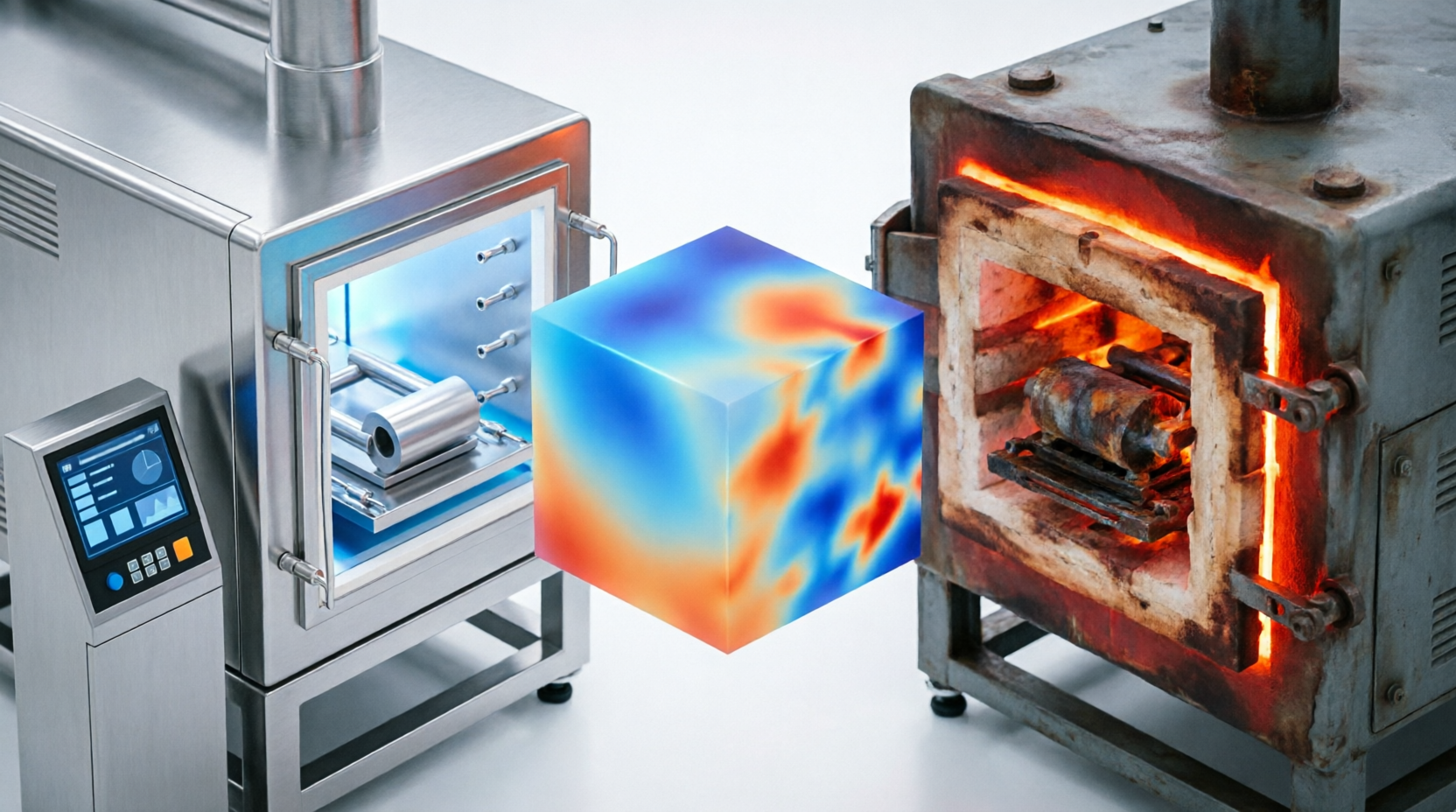
Vacuum heat treatment is an integrated technology that combines vacuum engineering with heat treatment processes. In this method, all or part of the heat treatment process is carried out under controlled vacuum conditions. Vacuum heat treatment can perform nearly all conventional heat treatment processes, including quenching, annealing, tempering, carburizing, chromium diffusion, and nitriding. Within quenching operations, different cooling methods such as gas quenching, oil quenching, salt bath quenching, and water quenching can also be implemented.
Compared with conventional heat treatment processes conducted in air or protective atmospheres, vacuum heat treatment offers several important advantages related to surface protection, mechanical properties, dimensional stability, and environmental performance.
Content
One of the most significant advantages of vacuum heat treatment is the protection it provides to both the internal structure and surface of metal components. During conventional heat treatment, oxidation and decarburization frequently occur when steel components are heated in the presence of oxygen.
Oxidation causes the metal surface to lose its metallic luster, increases surface roughness, and reduces dimensional accuracy. In addition, oxide scale formed on the steel surface can become a major cause of quenching soft spots and quenching cracks. Oxidation also reduces the strength and other mechanical properties of steel components.
Decarburization refers to the reduction of carbon content at the surface of steel during heating. In most cases, oxidation and decarburization occur simultaneously. The reduction of carbon content significantly lowers the quenching hardness, wear resistance, and fatigue performance of steel. For high-speed steels, decarburization can also reduce red hardness.
In vacuum heat treatment, the metal is heated under a specific vacuum level, preventing contact with oxygen. As a result, the workpiece surface remains free from oxidation and decarburization. This process produces a bright surface finish and improves the overall heat treatment quality. At the same time, reduction reactions are avoided in the vacuum environment, which prevents unintended carbon increase on the material surface.
Vacuum environments provide a strong degassing effect on molten metals and also help remove dissolved gases from solid metals. Among these gases, hydrogen is considered one of the most harmful elements in metallic materials.
During vacuum heating, hydrogen within metals and alloys can be rapidly reduced to extremely low levels. This process eliminates hydrogen embrittlement and significantly improves the plasticity, toughness, and fatigue strength of the material. As a result, the overall mechanical performance of the workpiece is enhanced.
When metals and alloys are heated in a vacuum environment, if the vacuum pressure is lower than the decomposition pressure of the corresponding oxides, these oxides will decompose. The released oxygen is immediately removed by the vacuum system, improving the surface condition of the metal. In some cases, the metal surface can even reach an activated state, providing a surface purification effect.
In vacuum furnaces, workpieces are primarily heated through thermal radiation. This heating method produces relatively small temperature differences between the internal and external sections of the component, resulting in lower thermal stress.
Because of the uniform heating conditions and controlled cooling processes, vacuum heat treatment generally results in significantly smaller dimensional deformation. In addition, heating and quenching are completed automatically within the vacuum system, eliminating the need to transfer hot components through air during the process.
Although salt bath heat treatment and protective atmosphere treatment can provide oxygen-free heating environments, the quenching stage still occurs in air or in media containing oxygen molecules. This can introduce additional deformation due to handling and environmental changes.
For example, in the treatment of Cr12MoV thread rolling dies, comparative experiments between vacuum heat treatment and salt bath treatment showed that vacuum heat treatment reduced deformation by approximately 70 percent, resulting in a significantly higher product qualification rate.
Vacuum heat treatment furnaces allow heating and quenching under controlled atmospheric conditions. This environment helps reduce the volatilization of alloying elements contained in the workpiece material.
By minimizing alloy element loss during high-temperature heating, the chemical composition of the material remains stable, ensuring consistent heat treatment quality and maintaining the intended material properties.
Vacuum heat treatment furnaces provide several additional benefits related to operational efficiency, process stability, and environmental performance.
These advantages make vacuum heat treatment an increasingly important technology in advanced manufacturing industries such as aerospace, automotive, tooling, and precision engineering.
Introduction: Aluminum silicate fiberboard material is currently a high-performance insulation material. Aluminum silicate fiberboard has excellent properties such as light w...
Introduction: Aluminum silicate refractory fiber products are made by selective processing of pyroxene, high-temperature melting, blow molding into fibers, solidification mol...
Introduction: 1、 Shaped ceramic fiber furnace lining for high alumina ceramic fiber board The shaped ceramic fiber furnace lining of high alumina ceramic fiber board mai...

An enterprise integrating design, R&D, production, sales and engineering services. Ceramic Fiber Board Manufacturers, Vacuum Heat Treatment Solutions in China
Phone: +86-13967261180
+86-17858398898
Email: ncjt@zjncjt.com
Arlen@zjncjt.com
Tel: +86-572-8295956
Add: Wulintou, Tangbei Village, Leidian Town, Deqing Country, Huzhou City, Zhejiang Province, China
Copyright © 2024 Zhejiang Nengcheng Crystal Fiber Co., Ltd. All Rights Reserved.

 English
 Español
 عربى
عربى