
E-mail: ncjt@zjncjt.com


Selecting the correct industrial furnace — whether a vacuum furnace, metal melting furnace, or high temperature muffle furnace — is the most consequential equipment decision in heat treatment, metallurgical processing, and materials research. Each furnace type is engineered for a fundamentally different thermal environment: vacuum furnaces eliminate atmospheric contamination for clean heat treatment of reactive metals and aerospace alloys; metal melting furnaces deliver the high power density required to liquefy bulk metal charges; and high temperature muffle furnaces provide controlled, contamination-free atmospheres for sintering, annealing, and materials testing at temperatures reaching 1,800°C and above. Matching furnace type, heating element, atmosphere control, and working volume to the specific process requirement determines output quality, energy efficiency, and total cost of ownership.
Content
A vacuum furnace processes materials in a chamber evacuated to pressures ranging from 10⁻¹ to 10⁻⁶ mbar, depending on the application and furnace design. At these pressures, the concentration of oxygen, nitrogen, and water vapor in the process atmosphere is reduced by factors of thousands to millions compared to ambient air, eliminating oxidation, decarburization, nitriding, and other atmospheric contamination reactions that would degrade part surface integrity and mechanical properties in open-atmosphere or inert-gas furnaces.
The vacuum system in an industrial furnace consists of a mechanical rotary vane pump for initial roughing (reducing pressure from atmospheric 1,013 mbar to approximately 0.1 mbar), followed by a roots blower or diffusion pump to achieve high vacuum in the range of 10⁻³ to 10⁻⁵ mbar. For ultra-high vacuum applications in research and semiconductor processing, turbomolecular pumps extend the achievable vacuum to 10⁻⁸ mbar. The chamber itself is constructed from stainless steel with double-wall water cooling to maintain structural integrity at process temperatures while keeping the outer shell at safe handling temperatures.
Vacuum furnace heating elements must operate effectively in vacuum without oxidizing or evaporating. The choice of heating element determines the maximum achievable temperature and the materials that can be processed without contamination risk from element outgassing.
| Heating Element | Max Temperature (°C) | Vacuum Compatibility | Primary Application |
|---|---|---|---|
| Molybdenum (Mo) | 1,600–1,800 | High vacuum (10⁻⁴ mbar) | Brazing, sintering, hardening |
| Tungsten (W) | 2,200–2,500 | High vacuum (10⁻⁵ mbar) | Refractory metal processing |
| Graphite | 2,000–2,200 | Medium vacuum (10⁻² mbar) | Carburizing, ceramic sintering |
| NiCr / FeCrAl | 1,200–1,400 | Low vacuum (10⁻¹ mbar) | General heat treatment |
A metal melting furnace is any furnace system designed to raise a metallic charge above its liquidus temperature to produce molten metal for casting, alloying, or refining. The fundamental design requirement — delivering sufficient power density to a confined volume to overcome the latent heat of fusion and maintain a superheated liquid — drives significant engineering differences from heat treatment furnaces. Melting aluminum requires approximately 400 kJ/kg; melting steel requires approximately 1,250 kJ/kg — differences that translate directly into furnace power rating and energy cost per tonne of output.
Induction melting furnaces are the dominant technology for precision metal melting in foundries, research facilities, and specialty alloy production. A water-cooled copper coil carrying medium-frequency alternating current (typically 500 Hz to 10,000 Hz) generates an electromagnetic field that induces eddy currents directly within the conductive metal charge, heating it from within without combustion products or arc contact. This direct electromagnetic coupling achieves melting efficiencies of 55–75% (electrical energy to metal heat) and produces electromagnetic stirring of the melt pool that homogenizes temperature and composition without mechanical agitation.
The electric arc furnace is the primary steelmaking technology for recycled scrap melting, producing approximately 30% of global steel output. Three graphite electrodes strike an arc into the scrap charge at voltages of 400–900V and currents of 30,000–100,000A, generating arc temperatures exceeding 3,500°C locally at the arc root. Modern EAF steelmaking achieves tap-to-tap times of 45–75 minutes for heats of 80–300 tonnes, with total electrical energy consumption of 300–400 kWh per tonne of liquid steel produced from scrap.
For smaller-scale melting of non-ferrous metals — aluminum, copper, brass, bronze, zinc, and precious metals — resistance-heated crucible furnaces provide cost-effective and controllable melting. Silicon carbide or graphite-clay crucibles are heated by surrounding resistance elements (typically SiC rods or NiCr wire), with the crucible transferring heat conductively to the metal charge. Furnace capacities of 2–500 kg cover the range from jewelry casting to automotive die casting alloy preparation. Temperature uniformity within the melt pool is typically ±5°C with PID controller and thermocouple feedback, sufficient for precise alloy preparation and degassing treatments.
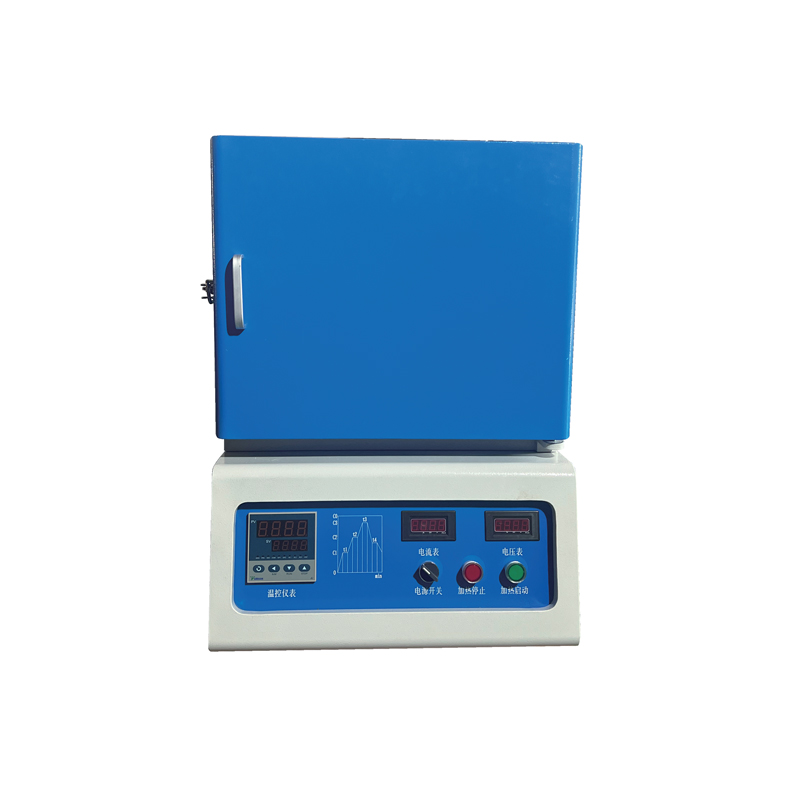
A muffle furnace is defined by its central design feature: the muffle — a chamber or tube made from refractory material (typically high-alumina ceramic, silicon carbide, or mullite) that physically separates the work from the heating elements and combustion products. The heating elements surround the outside of the muffle chamber, heating it by radiation and conduction, while the interior of the muffle maintains a clean, contamination-free environment directly accessible for process atmosphere control. A high temperature muffle furnace extends this principle to maximum temperatures of 1,400–1,800°C, covering the processing range for advanced ceramics, refractory materials, rare earth compounds, and specialized metallurgical research.
| Heating Element | Max Working Temp (°C) | Atmosphere Compatibility | Typical Application |
|---|---|---|---|
| NiCr / FeCrAl Wire | 1,100–1,200 | Air, inert gas | Ashing, calcination, general lab |
| Silicon Carbide (SiC) | 1,400–1,500 | Air, oxidizing, inert | Ceramic sintering, glass frit, annealing |
| MoSi₂ (Kanthal Super) | 1,600–1,800 | Air, oxidizing, inert | Advanced ceramics, refractory testing |
| Lanthanum Chromite (LaCrO₃) | 1,700–1,900 | Air, oxidizing | Ultra-high temp ceramics, research |
Temperature uniformity within the muffle working volume directly determines process repeatability. Laboratory and production muffle furnaces are classified by their temperature uniformity at operating set point, measured across the usable working volume at steady-state conditions. Standard commercial high temperature muffle furnaces achieve uniformity of ±5°C to ±15°C across the working volume, while precision research furnaces with multi-zone element control achieve ±2°C or better. For sintering applications where final density and grain size are sensitive to temperature variation, uniformity better than ±5°C is typically required to achieve consistent results across the full load.
The three furnace categories address fundamentally different process requirements and are rarely interchangeable. Understanding where each category excels — and where it is limited — prevents costly misspecification.
| Criterion | Vacuum Furnace | Metal Melting Furnace | High Temp Muffle Furnace |
|---|---|---|---|
| Primary Function | Contamination-free heat treatment | Liquefying metal charges | Controlled-atmosphere thermal processing |
| Typical Max Temp (°C) | 1,600–2,500 | 1,200–3,500+ (EAF) | 1,100–1,800 |
| Atmosphere | Vacuum / inert backfill | Open / slag-protected / vacuum (VIM) | Air / inert / controlled gas |
| Load State | Solid (parts/components) | Solid to liquid transition | Solid (crucibles/parts) |
| Surface Quality Output | Bright, scale-free | N/A (liquid output) | Clean (muffle protected) |
| Capital Cost (relative) | High | Medium–Very High | Low–Medium |
The refractory lining in any high-temperature furnace — whether vacuum, melting, or muffle — is the component most directly responsible for thermal efficiency, maximum operating temperature, and maintenance cycle frequency. Refractories must simultaneously resist the process temperature, maintain dimensional stability, resist chemical attack from slag, flux, or process atmosphere, and provide adequate thermal insulation to limit heat losses and outer shell temperature.
Precise temperature control is the defining operational requirement across all three furnace types. Modern industrial furnaces use PID (proportional-integral-derivative) controllers with programmable ramp-and-soak profiles, enabling automated execution of complex thermal cycles without operator intervention. The accuracy of the temperature control system determines both process repeatability and energy efficiency — overshooting the set point wastes energy and risks product damage, while undershooting extends cycle time and reduces productivity.
Choosing between a vacuum furnace, metal melting furnace, and high temperature muffle furnace — and selecting the appropriate configuration within each category — requires systematic evaluation of process, material, and operational requirements. The following framework covers the primary decision points.
Introduction: Aluminum silicate fiberboard material is currently a high-performance insulation material. Aluminum silicate fiberboard has excellent properties such as light w...
Introduction: Aluminum silicate refractory fiber products are made by selective processing of pyroxene, high-temperature melting, blow molding into fibers, solidification mol...
Introduction: 1、 Shaped ceramic fiber furnace lining for high alumina ceramic fiber board The shaped ceramic fiber furnace lining of high alumina ceramic fiber board mai...

An enterprise integrating design, R&D, production, sales and engineering services. Ceramic Fiber Board Manufacturers, Vacuum Heat Treatment Solutions in China
Phone: +86-13967261180
+86-17858398898
Email: ncjt@zjncjt.com
Arlen@zjncjt.com
Tel: +86-572-8295956
Add: Wulintou, Tangbei Village, Leidian Town, Deqing Country, Huzhou City, Zhejiang Province, China
Copyright © 2024 Zhejiang Nengcheng Crystal Fiber Co., Ltd. All Rights Reserved.

 English
 Español
 عربى
عربى