
E-mail: ncjt@zjncjt.com


Content
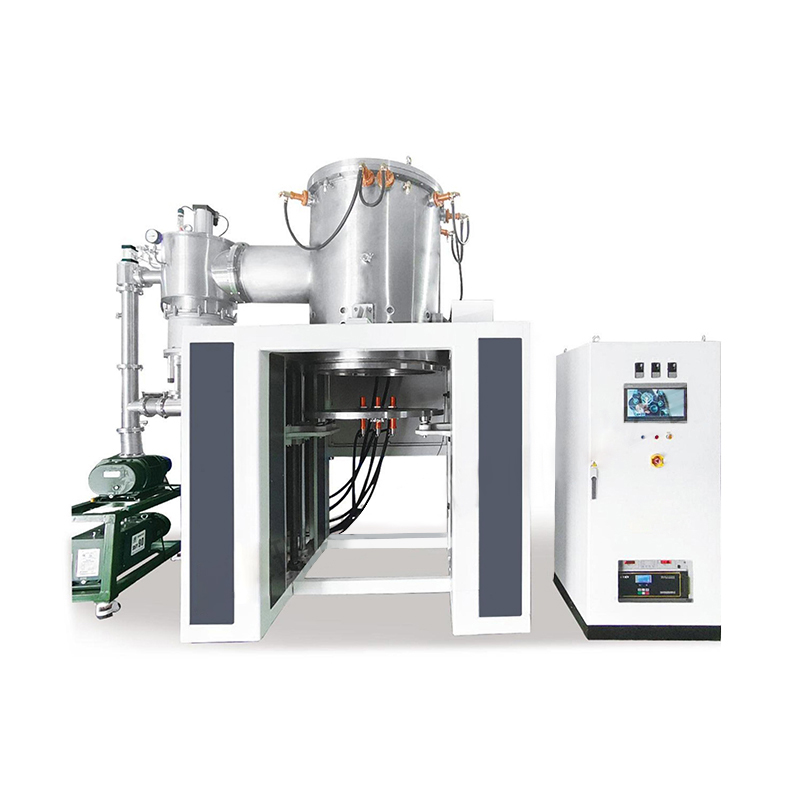
Vacuum Electric Furnace technology represents a critical advancement in high-temperature material processing, delivering precise thermal control in oxygen-free environments essential for advanced manufacturing. The vertical structure with round cavity design ensures superior vacuum efficiency while maintaining structural integrity under extreme thermal stress, preventing deformation during prolonged operation at elevated temperatures. This configuration enables consistent processing conditions necessary for demanding applications in aerospace, electronics, and materials science research.
The dual-layer furnace shell construction addresses both thermal management and durability requirements. The inner layer utilizes 310S stainless steel, an austenitic grade specifically selected for its exceptional oxidation resistance and high-temperature strength up to 1150°C. The outer carbon steel layer provides structural support and cost efficiency, with circulating water cooling between layers maintaining surface temperatures below safe operational thresholds. This engineering approach extends equipment lifespan while ensuring operator safety and process stability.
Vacuum Tungsten Wire Furnace systems employ multi-layer tungsten mesh annular heating configurations that deliver exceptional temperature uniformity across the entire hot zone. Tungsten's melting point of 3,422°C makes it the ideal heating element material for ultra-high-temperature applications, maintaining structural stability and consistent heat output where conventional elements would fail . The cage-type three-phase tungsten mesh structure ensures stable thermal distribution, enabling precise control over complex metallurgical processes.
The annular tungsten mesh arrangement surrounds the workpiece uniformly, eliminating cold spots and ensuring consistent thermal exposure. This configuration proves particularly valuable for sintering ceramic materials, degassing refractory metals, and processing high-purity compounds where temperature gradients could compromise product quality. The heating elements operate effectively in vacuum environments up to 2,200°C, with standard operating temperatures of 2,000°C for extended production cycles.
Tungsten wire heating elements demonstrate low vapor pressure at elevated temperatures, preventing contamination of sensitive materials during processing. The elements exhibit minimal creep deformation under thermal cycling, maintaining dimensional stability critical for long-term temperature uniformity. Advanced manufacturing techniques reduce energy consumption while maximizing heat transfer efficiency to the work zone.
Effective thermal management in Vacuum Electric Furnace design relies on sophisticated multi-layer heat shield configurations that minimize energy loss while maintaining vacuum integrity. The insulation system typically incorporates alternating layers of tungsten sheets, molybdenum plates, and stainless steel components, creating a gradient barrier that reflects radiant heat back into the hot zone. This approach achieves exceptional thermal efficiency, reducing power consumption and maintaining precise temperature control.
The multi-layer screen design addresses heat retention requirements while accommodating thermal expansion differentials between materials. Tungsten layers facing the hot zone withstand direct radiation exposure, while subsequent molybdenum and stainless steel layers progressively reduce heat flux toward the water-cooled outer shell . This graduated approach prevents thermal shock damage and maintains vacuum seals during rapid temperature cycling.
Specialized insulation configurations adapt to specific process requirements, with variations in layer thickness and material selection optimizing performance for particular temperature ranges and atmospheric conditions. The design expertise ensures minimal heat loss, rapid thermal response, and extended service life for both heating elements and structural components.
High Vacuum Tungsten Wire Furnace systems achieve exceptional vacuum levels through integrated pumping configurations combining mechanical pumps, Roots blowers, and diffusion or molecular pumps. Cold-state ultimate vacuum reaches 6.67×10⁻³ Pa, with pressure rise rates maintained below 4 Pa/hour, ensuring contamination-free processing environments. These specifications prove critical for degassing refractory metals, sintering high-purity ceramics, and conducting sensitive materials research.
The cylindrical welded flange construction with finely polished 304 stainless steel interior surfaces minimizes outgassing and facilitates rapid pump-down cycles. Double-layer water-cooled flat covers maintain thermal stability while preserving vacuum integrity at high temperatures. Observation ports, thermocouple access, and protective atmosphere inlets enable comprehensive process monitoring and control without compromising vacuum conditions.
Precision temperature management in Vacuum Electric Furnace operations relies on tungsten-rhenium thermocouples (WRe5/26) specifically selected for accuracy in ultra-high-temperature ranges. These thermocouples maintain calibration stability under vacuum conditions, providing reliable feedback for closed-loop control systems. Advanced PID control algorithms with programmable segment capability enable precise management of heating rates, dwell times, and cooling profiles.
Modern Vacuum Tungsten Wire Furnace systems incorporate touchscreen interfaces with multi-curve storage, enabling operators to program complex thermal cycles with unattended operation capability. Real-time monitoring displays sintering power, voltage, and vacuum levels, with data logging functionality supporting process validation and quality documentation [^16^]. Safety interlocks protect against overcurrent conditions, water flow failures, over-temperature excursions, and thermocouple disconnections.
Vacuum Tungsten Wire Furnace technology serves diverse industrial sectors requiring ultra-high-temperature processing in controlled atmospheres. Primary applications include sintering of ceramic materials including alumina, zirconia, and transparent optical ceramics; degassing and purification of refractory metals such as tungsten, molybdenum, and titanium; and heat treatment of hard alloys and specialized metal compounds. The equipment supports both research laboratory requirements and industrial production scaling.
The furnace accommodates processing of high-melting-point metals and alloys that would oxidize or degrade in conventional atmospheric heating. Vacuum sintering of cemented carbides produces fully dense components with superior mechanical properties, while ceramic sintering achieves theoretical density for high-performance applications in aerospace and medical devices. The controlled environment enables precise stoichiometry control for advanced electronic and optical materials.
Vacuum Electric Furnace systems with tungsten wire heating elements operate across standardized electrical specifications of AC 3×380V/50Hz, with rated power ranging from 20 kW for laboratory units to larger industrial configurations. Maximum temperature capability reaches 2,200°C with recommended continuous operation at 2,000°C, while heating zone dimensions vary based on production requirements.
| Parameter | Specification |
| Maximum Temperature | 2,200°C (Standard operation 2,000°C) |
| Ultimate Vacuum | 6.67×10⁻³ Pa |
| Pressure Rise Rate | ≤4 Pa/hour |
| Heating Element | Tungsten Wire Mesh Cage |
| Inner Shell Material | 310S/304 Stainless Steel |
| Outer Shell Material | Carbon Steel with Water Cooling |
| Insulation System | Multi-Layer Tungsten/Molybdenum/SS Screens |
| Process Atmospheres | Vacuum, Argon, Nitrogen, Dry Hydrogen |
Comprehensive safety engineering protects both equipment investment and operational personnel. Integrated water cooling systems maintain critical component temperatures, with backup municipal water connections ensuring protection during power interruptions. Automatic exhaust ignition systems safely process volatile byproducts, while over-temperature protection and thermocouple monitoring prevent runaway conditions.
Tungsten heating elements require careful handling due to brittleness at room temperature, with workpiece loading procedures designed to prevent mechanical damage. Regular inspection of vacuum seals, thermocouple integrity, and cooling system flow rates ensures consistent performance and prevents unplanned downtime. Winter operation requires freeze protection for circulating water systems, while post-operation vacuum maintenance facilitates rapid pump-down for subsequent cycles.
Choosing appropriate Vacuum Electric Furnace equipment requires evaluation of maximum temperature requirements, workpiece dimensions, vacuum level specifications, and production throughput needs. Tungsten wire heating systems prove essential for applications exceeding 1,800°C, where molybdenum or graphite alternatives would fail . The vertical round-cavity design accommodates various loading configurations while optimizing vacuum pumping efficiency.
The combination of 310S stainless steel inner construction, carbon steel outer shell with water cooling, multi-layer tungsten mesh heating, and advanced vacuum technology positions these furnaces as essential equipment for next-generation materials processing across aerospace, medical, electronics, and energy sectors.
Introduction: Aluminum silicate fiberboard material is currently a high-performance insulation material. Aluminum silicate fiberboard has excellent properties such as light w...
Introduction: Aluminum silicate refractory fiber products are made by selective processing of pyroxene, high-temperature melting, blow molding into fibers, solidification mol...
Introduction: 1、 Shaped ceramic fiber furnace lining for high alumina ceramic fiber board The shaped ceramic fiber furnace lining of high alumina ceramic fiber board mai...

An enterprise integrating design, R&D, production, sales and engineering services. Ceramic Fiber Board Manufacturers, Vacuum Heat Treatment Solutions in China
Phone: +86-13967261180
+86-17858398898
Email: ncjt@zjncjt.com
Arlen@zjncjt.com
Tel: +86-572-8295956
Add: Wulintou, Tangbei Village, Leidian Town, Deqing Country, Huzhou City, Zhejiang Province, China
Copyright © 2024 Zhejiang Nengcheng Crystal Fiber Co., Ltd. All Rights Reserved.

 English
 Español
 عربى
عربى