
E-mail: ncjt@zjncjt.com


Content
In modern manufacturing, precise thermal control is not a luxury — it is a process requirement. The industrial electric furnace has become the backbone of high-temperature operations across metallurgy, ceramics, aerospace, and advanced materials production. Unlike fuel-based alternatives, electric furnaces deliver repeatable, programmable heat profiles with minimal atmospheric contamination, making them essential for processes that demand tight tolerances.
What distinguishes today's industrial electric furnace from older generations is its integration of digital control systems. PID controllers, thyristor power regulation, and real-time data logging allow operators to define and hold specific temperature curves — critical when working with alloys or composites that degrade outside a narrow processing window. Chamber temperatures routinely reach 1,000°C to 1,800°C depending on the heating element material, whether silicon carbide, molybdenum disilicide, or tungsten.
The shift toward electrification is also driven by regulatory pressure. As industrial CO₂ targets tighten across the EU and North America, manufacturers replacing gas-fired systems with electric alternatives are gaining both compliance advantages and operational predictability. Facilities report that switching to fully electric heating reduces on-site emissions by up to 60% while cutting maintenance intervals significantly.
Selecting the right metal melting furnace depends on the alloy composition, batch size, melt rate, and downstream casting requirements. Each furnace type carries distinct operating characteristics, and matching them to the application prevents quality defects and unnecessary energy expenditure.
| Furnace Type | Best For | Typical Capacity | Key Advantage |
|---|---|---|---|
| Induction Melting Furnace | Steel, iron, copper alloys | 50 kg – 20 t | Fast melt, low oxidation loss |
| Arc Melting Furnace | Specialty steels, recycled scrap | 1 t – 200 t | High throughput, scrap flexibility |
| Resistance Melting Furnace | Aluminum, zinc, lead | 100 kg – 5 t | Stable temperature, low investment |
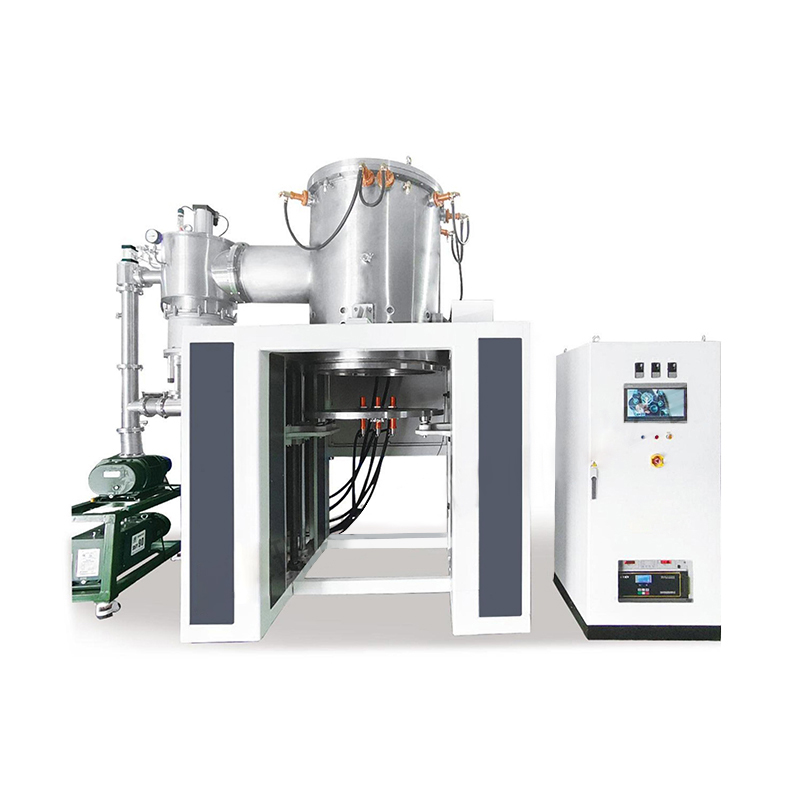
| Vacuum Melting Furnace | Superalloys, titanium, rare earth | 5 kg – 2 t | Zero contamination, high purity |
For foundries handling mixed alloy batches, induction melting furnaces offer the greatest operational flexibility. The electromagnetic stirring effect homogenizes melt chemistry without mechanical intervention, reducing segregation in final castings. Vacuum systems, while higher in capital cost, are indispensable for aerospace-grade titanium components where interstitial oxygen levels must remain below 0.15%.
Energy consumption represents 40–60% of operating costs in most thermal processing facilities, making the design of an energy efficient industrial furnace a direct profitability driver. Modern furnace engineering targets energy reduction through four interconnected mechanisms: insulation quality, heat recovery, power modulation, and atmosphere control.
High-performance ceramic fiber modules and microporous insulation boards have replaced older dense firebrick linings in many applications. These materials offer thermal conductivity values as low as 0.06 W/m·K at 400°C, compared to 1.0–1.5 W/m·K for traditional castable refractories. The result is a furnace shell that remains near ambient temperature even during full-load operation, dramatically cutting radiation losses to the surrounding environment.
Continuous batch furnaces equipped with regenerative cooling circuits can recapture 25–35% of input energy from exhaust gases and cooling water. This recovered heat is redirected to preheat incoming workloads or supply auxiliary plant heating, cutting total site energy demand without sacrificing throughput. Payback periods for heat recovery retrofits typically range from 18 to 36 months depending on furnace utilization rates.
Thyristor phase-angle firing and zero-cross switching allow furnace power to be modulated at millisecond intervals, eliminating overshoot and reducing peak demand charges. Combined with load-shifting algorithms that schedule high-energy cycles during off-peak grid hours, smart power management can cut electricity costs by 15–20% on an annualized basis without any process changes.
No two production processes are identical, and high-temperature equipment built to generic specifications routinely underperforms or overcomplicates the intended application. Effective customization starts with a detailed process audit that maps the workload geometry, required atmosphere, heating rate, soak time, and cooling profile before a single component is specified.
Common customization dimensions for industrial electric furnace and metal melting furnace systems include:
For manufacturers processing reactive metals such as titanium or zirconium, sealed retort chambers with leak-rate specifications below 10⁻⁴ mbar·L/s are standard. Sintering applications for advanced ceramics or powder metallurgy components frequently require controlled ramp rates as precise as ±1°C/min to manage shrinkage and density gradients across the part cross-section.
Even the best-engineered energy efficient industrial furnace loses performance without a disciplined maintenance and operational protocol. Thermal cycling causes gradual degradation in refractory linings, element connections, and sealing components. Establishing preventive maintenance windows before failure events occur is considerably less costly than unplanned downtime repairs, which in continuous production environments can exceed $10,000 per hour.
Recommended operational practices include:
Digital maintenance platforms that aggregate sensor data and trigger condition-based alerts are increasingly standard on new installations. Retrofitting older furnaces with IoT sensor packages costs a fraction of a new installation and extends serviceable life by 5–10 years while maintaining competitive energy performance. As global manufacturing targets both precision and sustainability, investing in well-engineered, properly maintained high-temperature equipment is one of the clearest paths to durable operational advantage.
Introduction: Aluminum silicate fiberboard material is currently a high-performance insulation material. Aluminum silicate fiberboard has excellent properties such as light w...
Introduction: Aluminum silicate refractory fiber products are made by selective processing of pyroxene, high-temperature melting, blow molding into fibers, solidification mol...
Introduction: 1、 Shaped ceramic fiber furnace lining for high alumina ceramic fiber board The shaped ceramic fiber furnace lining of high alumina ceramic fiber board mai...

An enterprise integrating design, R&D, production, sales and engineering services. Ceramic Fiber Board Manufacturers, Vacuum Heat Treatment Solutions in China
Phone: +86-13967261180
+86-17858398898
Email: ncjt@zjncjt.com
Arlen@zjncjt.com
Tel: +86-572-8295956
Add: Wulintou, Tangbei Village, Leidian Town, Deqing Country, Huzhou City, Zhejiang Province, China
Copyright © 2024 Zhejiang Nengcheng Crystal Fiber Co., Ltd. All Rights Reserved.

 English
 Español
 عربى
عربى