
E-mail: ncjt@zjncjt.com


Content
High temperature thermal insulation materials serve as critical barriers in industrial environments where extreme heat presents operational challenges, safety hazards, and energy efficiency concerns. These specialized materials prevent heat transfer in applications ranging from industrial furnaces and boilers to aerospace components and power generation equipment. Unlike conventional building insulation designed for moderate temperature differentials, high temperature thermal insulation materials must maintain structural integrity and thermal performance when exposed to sustained temperatures between 500°C and 2000°C.
The distinction between thermal insulation and heat preservation becomes particularly relevant when selecting materials for specific industrial processes. While both functions involve managing heat transfer, high temperature applications demand materials that not only resist heat flow but also withstand mechanical stress, thermal cycling, and chemical exposure without degradation. Fiber cotton and ceramic fiber products represent the leading solutions in this demanding category.
Thermal conductivity serves as the primary metric for evaluating high temperature thermal insulation materials. This coefficient measures how effectively heat transfers through a material, with lower values indicating superior insulating properties. Industrial applications require materials exhibiting thermal conductivity below 0.1 W/m·K to achieve meaningful energy conservation and surface temperature control.
Aerogel composites represent the pinnacle of thermal insulation technology, achieving conductivity values below 0.02 W/m·K even at elevated temperatures. These nano-porous structures trap air in microscopic pockets, minimizing convective and conductive heat transfer simultaneously. When integrated into fiber cotton matrices, aerogel-enhanced materials provide exceptional flexibility alongside record-breaking thermal resistance.
Ceramic fiber products, including spun fiber cotton and needled blankets, typically demonstrate thermal conductivity ranging from 0.05 to 0.08 W/m·K at 1000°C. While slightly higher than aerogel, ceramic fiber offers superior high-temperature stability, maintaining performance characteristics at continuous operating temperatures up to 1400°C depending on the alumina-silica ratio.
| Material Type | Max Temperature (°C) | Thermal Conductivity (W/m·K) | Primary Applications |
| Ceramic Fiber Cotton | 1260-1400 | 0.05-0.08 | Furnace linings, expansion joints |
| Alumina-Silica Fiber | 1400-1600 | 0.06-0.10 | Steel ladles, kiln cars |
| Polycrystalline Wool | 1600 | 0.08-0.12 | High-temperature gaskets, seals |
| Aerogel Composite | 650 | <0.02 | Pipeline insulation, cryogenic |
| Refractory Ceramic Fiber | 1800-2000 | 0.10-0.15 | Glass melting furnaces |
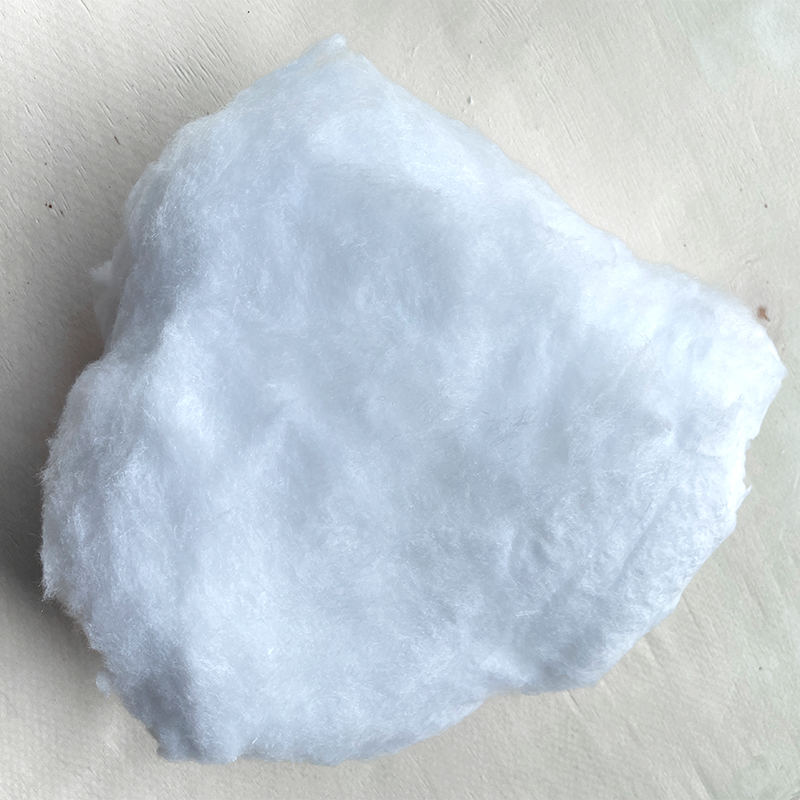
Fiber cotton manufactured from ceramic materials provides the foundation for numerous high temperature thermal insulation systems. Produced through melting and fiberization of alumina-silica blends, these wool-like materials combine lightweight handling characteristics with remarkable thermal stability. The fibrous structure creates millions of air pockets that impede heat flow while allowing the material to conform to complex geometries and irregular surfaces.
Manufacturers offer ceramic fiber cotton in various forms to suit specific installation requirements. Bulk fiber serves as loose-fill insulation for packing expansion joints, sealing around penetrations, and insulating irregular cavities. Needled blankets transform fiber cotton into flexible sheets with enhanced tensile strength, suitable for wrapping pipes, lining furnace walls, and creating removable insulation pads. Vacuum-formed boards provide rigid sections for applications requiring dimensional stability and compression resistance.
Standard ceramic fiber cotton contains approximately 45-55% alumina and 45-55% silica, delivering classification temperature ratings of 1260°C. High-purity formulations increase alumina content to 60-65%, extending maximum service temperatures to 1400°C. Zirconia-bearing grades incorporate zirconium oxide to achieve 1430°C ratings, while polycrystalline mullite and alumina fibers push the boundary to 1600°C for the most demanding industrial processes.
Industrial furnaces operating between 800°C and 1700°C represent the primary application domain for high temperature thermal insulation materials. Fiber cotton linings reduce heat storage in furnace walls, enabling rapid temperature cycling and improved thermal efficiency. The low thermal mass of ceramic fiber systems compared to traditional refractory brick translates to faster heat-up times and reduced fuel consumption during operating cycles.
Boiler applications benefit from fiber cotton insulation on steam drums, headers, and piping systems. The material's resistance to thermal shock prevents cracking and spalling during startup and shutdown sequences. Additionally, the acoustic dampening properties of fibrous insulation reduce noise levels in boiler rooms, improving working conditions for operators.
Power generation facilities utilize high temperature thermal insulation materials throughout steam systems, gas turbines, and exhaust ducting. Fiber cotton blankets wrapped around high-temperature piping maintain surface temperatures at safe levels for personnel protection while minimizing heat loss that would otherwise reduce cycle efficiency. Combined cycle power plants particularly value the lightweight nature of ceramic fiber, which reduces structural loading on elevated platforms and support steel.
Certain advanced materials blur the traditional boundaries between high temperature thermal insulation and low-temperature preservation. Aerogel blankets exemplify this versatility, delivering sub-0.02 W/m·K thermal conductivity across a temperature range spanning cryogenic conditions to 650°C. This exceptional performance derives from the material's nano-scale pore structure, which restricts molecular motion and eliminates convective heat transfer.
Ceramic fiber products similarly demonstrate adaptability across temperature extremes. While primarily marketed for high-temperature industrial service, these materials effectively prevent heat gain in refrigeration and cryogenic applications when properly specified. The key consideration involves matching the material's classification temperature to the application requirements without excessive over-specification that would increase costs unnecessarily.
Proper installation determines the real-world performance of high temperature thermal insulation materials. Fiber cotton products require careful handling to maintain loft and avoid compression that would increase thermal conductivity. Anchoring systems must accommodate thermal expansion without tearing the insulation, and joints between sections need staggered placement to prevent thermal short circuits.
Health and safety protocols have evolved significantly regarding fiber cotton products. Traditional refractory ceramic fibers carried respiratory health concerns similar to asbestos, prompting development of low-biopersistence alkaline earth silicate fibers. These modern formulations dissolve in bodily fluids within weeks rather than persisting indefinitely, dramatically reducing health risks while maintaining thermal performance. Always verify fiber cotton products comply with current regulatory classifications and implement appropriate personal protective equipment during installation.
Research continues advancing the capabilities of high temperature thermal insulation materials. Nano-structural engineering promises to reduce thermal conductivity further by manipulating heat transfer at the molecular level. Bio-based binder systems aim to eliminate formaldehyde and other volatile compounds from fiber cotton manufacturing. Recycling programs for spent ceramic fiber products address sustainability concerns in industries generating significant insulation waste.
The integration of smart sensing capabilities into insulation systems represents another frontier. Fiber cotton products incorporating temperature-monitoring fibers enable real-time assessment of lining condition, predicting maintenance needs before catastrophic failure occurs. These innovations ensure that high temperature thermal insulation materials will continue evolving to meet the demanding requirements of modern industrial processes.
Introduction: Aluminum silicate fiberboard material is currently a high-performance insulation material. Aluminum silicate fiberboard has excellent properties such as light w...
Introduction: Aluminum silicate refractory fiber products are made by selective processing of pyroxene, high-temperature melting, blow molding into fibers, solidification mol...
Introduction: 1、 Shaped ceramic fiber furnace lining for high alumina ceramic fiber board The shaped ceramic fiber furnace lining of high alumina ceramic fiber board mai...

An enterprise integrating design, R&D, production, sales and engineering services. Ceramic Fiber Board Manufacturers, Vacuum Heat Treatment Solutions in China
Phone: +86-13967261180
+86-17858398898
Email: ncjt@zjncjt.com
Arlen@zjncjt.com
Tel: +86-572-8295956
Add: Wulintou, Tangbei Village, Leidian Town, Deqing Country, Huzhou City, Zhejiang Province, China
Copyright © 2024 Zhejiang Nengcheng Crystal Fiber Co., Ltd. All Rights Reserved.

 English
 Español
 عربى
عربى