
E-mail: ncjt@zjncjt.com


Content
High temperature thermal insulation materials are engineered specifically to resist heat transfer in environments where temperatures exceed the threshold that conventional insulation products can tolerate. While standard building insulation is designed for ambient temperature ranges — typically below 200°C — industrial and process applications routinely expose insulation materials to operating temperatures between 500°C and 2000°C. At these extremes, the material must simultaneously maintain low thermal conductivity, resist physical degradation from thermal cycling, and preserve its structural integrity without shrinking, cracking, or releasing hazardous byproducts.
The fundamental performance metric for any thermal insulation material is thermal conductivity — the rate at which heat passes through a given thickness of material under a defined temperature gradient, expressed in watts per meter-kelvin (W/m·K). For high temperature insulation applications, materials with thermal conductivity below 0.1 W/m·K are generally specified, with the most advanced options such as aerogel achieving values below 0.02 W/m·K. Lower thermal conductivity translates directly into thinner insulation layers for equivalent heat retention, reduced energy losses from industrial equipment, and lower operating costs over the system's service life.
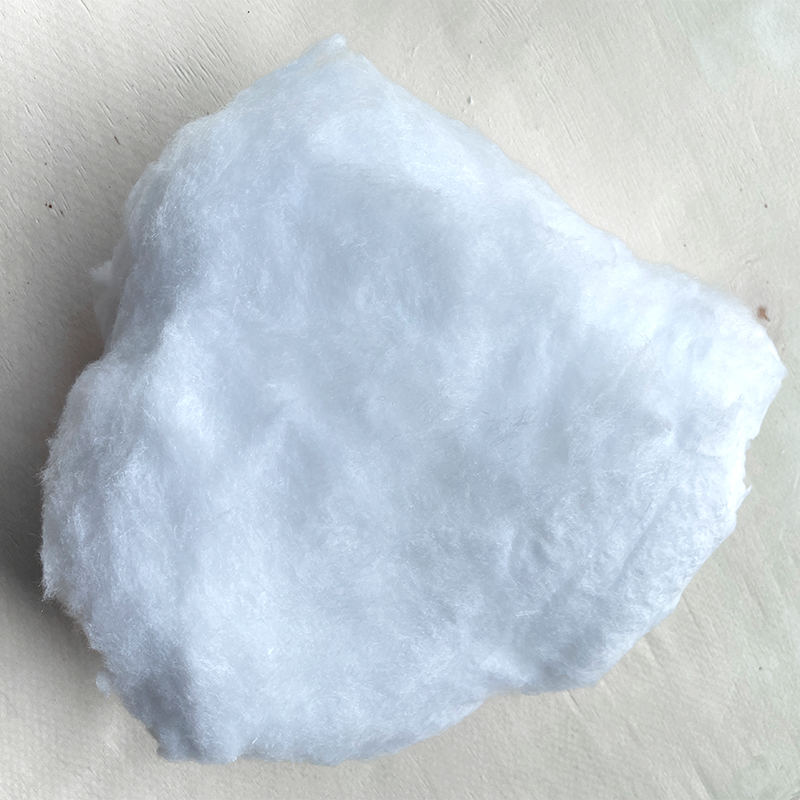
Ceramic fiber cotton is one of the most widely deployed high temperature thermal insulation materials in industrial settings, valued for its combination of low thermal mass, high temperature resistance, and physical flexibility. Produced by melting and fiberizing alumina-silica compounds — typically in ratios ranging from 45% alumina / 55% silica for standard grades up to 95%+ alumina for ultra-high temperature grades — ceramic fiber cotton forms a lightweight, porous fibrous structure that traps air within its matrix and severely restricts conductive and convective heat transfer.
The low thermal mass of ceramic fiber cotton is particularly significant for applications involving frequent thermal cycling, such as batch-process industrial furnaces. Unlike dense refractory bricks, which store large quantities of heat that must be dissipated during cool-down cycles, ceramic fiber cotton absorbs and releases heat rapidly, reducing the energy required per heating cycle and shortening cycle times. This characteristic alone makes it the preferred lining material for heat treatment furnaces, forge furnaces, and kilns where production schedules demand rapid temperature changes.
Ceramic fiber cotton is manufactured in multiple temperature classification grades, each defined by its maximum continuous service temperature and corresponding alumina content. Selecting the correct grade for the application is critical — under-specifying leads to fiber shrinkage, strength loss, and premature failure, while over-specifying adds unnecessary material cost without performance benefit.
Ceramic fiber cotton is one of several material categories available for high temperature thermal insulation applications. Each material type occupies a distinct performance envelope defined by its maximum service temperature, thermal conductivity, density, mechanical properties, and cost. Understanding these differences is essential for making informed specification decisions across different industrial contexts.
| Material | Max Service Temp. | Thermal Conductivity | Density (kg/m³) | Best Application |
|---|---|---|---|---|
| Ceramic Fiber Cotton | 1260–1800°C | 0.06–0.12 W/m·K | 64–192 | Furnace linings, thermal cycling |
| Aerogel Blanket | Up to 650°C | <0.02 W/m·K | 100–200 | Pipe insulation, space-limited installs |
| Microporous Board | Up to 1000°C | 0.018–0.025 W/m·K | 250–320 | Industrial ovens, high-performance panels |
| Calcium Silicate Board | Up to 1000°C | 0.10–0.19 W/m·K | 200–870 | Boilers, structural insulation panels |
| Dense Refractory Brick | 1400–1800°C | 0.8–2.0 W/m·K | 1800–2400 | Hot-face lining, abrasion zones |
This comparison illustrates that no single material dominates across all performance dimensions. Ceramic fiber cotton leads on high temperature ceiling and thermal cycling performance. Aerogel leads on absolute thermal conductivity but is constrained to lower maximum temperatures. Dense refractory brick provides mechanical durability and abrasion resistance but at the cost of high thermal mass and conductivity. Effective high temperature insulation system design frequently combines multiple material types — for example, a ceramic fiber cotton backup layer behind a thin hot-face refractory lining — to capture the performance advantages of each.
Industrial furnaces and boilers represent the most thermally demanding and commercially significant application domain for high temperature thermal insulation materials. In a continuous operation industrial furnace — such as a wire annealing furnace, a rotary kiln, or a pusher-type heat treatment furnace — the insulation system must limit heat loss through the furnace shell to maintain process temperature uniformity, reduce fuel or electrical energy consumption, and protect the outer structural shell from temperatures that would cause distortion or oxidation damage.
The energy savings achievable through proper insulation specification are substantial and directly quantifiable. A well-insulated ceramic fiber cotton furnace lining typically reduces heat loss through the furnace walls by 60–75% compared to an equivalent dense brick construction, translating into annual fuel savings that can offset the higher initial material cost of ceramic fiber within one to three years of operation, depending on energy prices and production schedules. For boiler insulation applications, where the operating temperatures are generally in the 300–600°C range, aerogel blankets and microporous boards are increasingly specified alongside ceramic fiber cotton for their ultra-low thermal conductivity values, enabling thinner insulation systems without compromising heat retention performance.
Modern high-performance furnace insulation systems use a layered approach that assigns each material type to the temperature zone it is best suited for. A typical three-layer system for a furnace with an interior operating temperature of 1300°C might be structured as follows: a hot-face layer of high-purity ceramic fiber cotton rated to 1400°C directly exposed to the process heat; a mid-layer of standard ceramic fiber cotton rated to 1260°C operating at a reduced temperature due to the thermal gradient; and a backup layer of microporous board or calcium silicate board on the cold face to provide additional insulation value at minimal additional thickness. This zoned approach maximizes insulation performance per unit of installed thickness while controlling material costs by reserving the most expensive high-grade materials for the zones where their temperature resistance is actually required.
A practical distinction worth clarifying is the difference between thermal insulation and heat preservation — terms that are often used interchangeably but describe subtly different functional objectives. Thermal insulation focuses on blocking heat transfer between a high-temperature source and a lower-temperature environment, preventing energy loss and protecting adjacent structures. Heat preservation focuses on maintaining the temperature of a process or stored material over time by minimizing heat dissipation. In many industrial applications, both objectives must be achieved simultaneously by the same material system.
Both aerogel and ceramic fiber are well-suited to serving dual insulation and heat preservation roles, and their selection for a given application depends on the specific temperature range, form factor requirements, and mechanical constraints involved. Aerogel composites, with thermal conductivity below 0.02 W/m·K, are particularly effective for heat preservation in pipework systems where maintaining fluid temperature over long distribution runs is critical — as in district heating networks, chemical process pipelines, and LNG facility insulation. Ceramic fiber cotton, with its broader temperature range extending to 1800°C in polycrystalline grades, handles heat preservation in high-temperature batch processes where both the heating phase and the hold-at-temperature phase require consistent insulation performance across extreme temperature differentials.
When specifying high temperature thermal insulation materials for any application, the starting point should always be a clear definition of the operating temperature range, the required thermal conductivity, the acceptable installed thickness, the mechanical and chemical environment the material will be exposed to, and the expected service life. With these parameters defined, the comparative performance data for ceramic fiber cotton, aerogel, microporous products, and other available materials can be evaluated objectively to identify the specification that delivers the optimal balance of technical performance, installation practicality, and total lifecycle cost.
Introduction: Aluminum silicate fiberboard material is currently a high-performance insulation material. Aluminum silicate fiberboard has excellent properties such as light w...
Introduction: Aluminum silicate refractory fiber products are made by selective processing of pyroxene, high-temperature melting, blow molding into fibers, solidification mol...
Introduction: 1、 Shaped ceramic fiber furnace lining for high alumina ceramic fiber board The shaped ceramic fiber furnace lining of high alumina ceramic fiber board mai...

An enterprise integrating design, R&D, production, sales and engineering services. Ceramic Fiber Board Manufacturers, Vacuum Heat Treatment Solutions in China
Phone: +86-13967261180
+86-17858398898
Email: ncjt@zjncjt.com
Arlen@zjncjt.com
Tel: +86-572-8295956
Add: Wulintou, Tangbei Village, Leidian Town, Deqing Country, Huzhou City, Zhejiang Province, China
Copyright © 2024 Zhejiang Nengcheng Crystal Fiber Co., Ltd. All Rights Reserved.

 English
 Español
 عربى
عربى