
E-mail: ncjt@zjncjt.com


Tube furnaces have been the backbone of high-temperature processing for decades — yet the gap between a well-specified unit and a poorly matched one can mean the difference between consistent results and costly failures. Whether you're sintering advanced ceramics, conducting CVD experiments, or processing alloys under controlled atmospheres, understanding what separates a capable high temperature tube furnace from one that merely gets hot is essential before you commit to a purchase.
Content
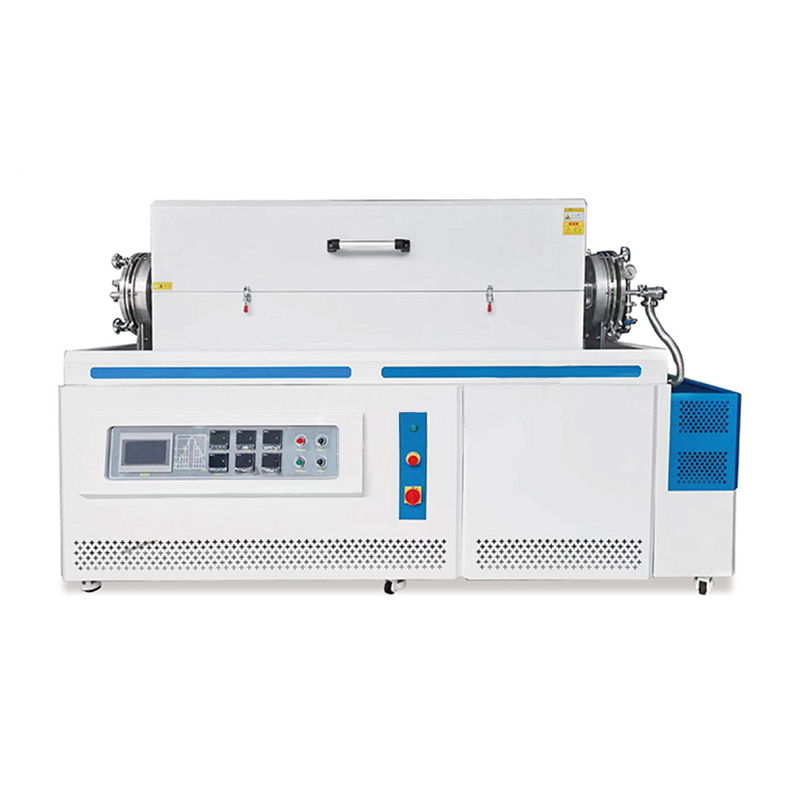
A tube furnace heats materials placed inside a cylindrical work tube, which sits at the center of the furnace chamber. Heating elements surrounding the tube — typically resistance wire, silicon carbide (SiC), or molybdenum disilicide (MoSi₂) — radiate and conduct heat inward, raising the tube and its contents to the target temperature.
The cylindrical geometry is not incidental. It creates a highly uniform thermal environment along the heated length, minimizing temperature gradients that would otherwise compromise process consistency. Heat is applied symmetrically around the tube's circumference, and modern multi-zone designs extend this uniformity across longer working lengths by independently controlling separate heating segments.
Most tube furnaces are configured horizontally, though vertical orientations are also available. Horizontal models are standard for most laboratory and production processes, while vertical configurations suit applications involving powder samples, gravity-dependent flow, or specific loading requirements.
Before evaluating any tube furnace, four parameters define the operating envelope: maximum temperature, heating element type, work tube material, and heated zone length. Each constrains what the furnace can do.
Maximum temperature determines the heating element material required. Resistance wire elements typically reach 1200°C; SiC elements extend that to around 1500°C; MoSi₂ elements push performance to 1700°C and beyond. Selecting an element rated well above your process temperature — rather than right at its limit — extends service life significantly.
Work tube material is equally critical, as it must withstand both the thermal load and any chemical exposure from the process atmosphere:
| Tube Material | Max Temperature | Best Suited For |
|---|---|---|
| Quartz | ~1200°C | High-purity processes, oxidizing atmospheres |
| Alumina (Al₂O₃) | ~1700°C | High temperature, chemical resistance, inert atmospheres |
| Mullite | ~1600°C | General high-temperature use, thermal shock resistance |
| Stainless Steel | ~1100°C | Reducing or reactive gas environments |
| Inconel | ~1200°C | Oxidizing and reactive atmospheres, corrosive gases |
Heated zone length determines how much sample volume the furnace can process at uniform temperature in a single run. Standard laboratory units range from 150 mm to 1200 mm. For samples requiring consistent treatment across their full length, the usable uniform zone — typically the central portion — is the operative figure, not the total heated length.
The range of processes carried out in high temperature tube furnaces spans research, advanced manufacturing, and quality testing — often within the same facility.
Ceramic sintering is among the most demanding applications. Achieving full densification in advanced ceramics requires sustained temperatures above 1400°C with tight uniformity, typically within ±5°C across the working zone. Any deviation introduces structural inconsistencies that compromise mechanical performance.
Annealing and heat treatment of metals and alloys rely on tube furnaces to relieve internal stresses, modify grain structure, or achieve specific hardness profiles. The ability to control heating and cooling rates precisely — rather than simply hitting a target temperature — is what distinguishes a capable furnace from an inadequate one in these applications.
Chemical vapor deposition (CVD) requires not only high temperature but also strict atmospheric control. Reactive precursor gases must flow through the heated zone at defined rates, react at the substrate surface, and be safely exhausted. Furnaces used for CVD need sealed tube ends, reliable gas inlet/outlet fittings, and the ability to maintain atmosphere integrity at process temperature.
Research institutions and universities use tube furnaces extensively for nanomaterial synthesis, powder calcination, and high-temperature experiments under controlled or reactive atmospheres. The reproducibility of tube furnace heating profiles makes them well suited to experiments requiring repeatable thermal conditions across multiple runs. For applications requiring a fully enclosed chamber rather than a tube geometry, high-temperature vacuum electric furnaces for controlled atmosphere processing offer an alternative configuration worth evaluating.
Many high-temperature processes cannot run in air. Oxidation, decarburization, or unintended chemical reactions degrade sample quality or make results non-reproducible. Atmosphere control transforms a basic tube furnace into a precision processing tool.
Inert gas operation — typically argon or nitrogen — protects oxidation-sensitive materials during heating and cooling. The tube is purged before the process begins, and a controlled positive-pressure flow is maintained throughout the run. This is the most common form of atmosphere processing and is straightforward to implement with sealed end caps and standard gas fittings.
Reactive atmospheres introduce process gases such as hydrogen, forming gas, or specific chemical precursors into the tube. These applications require furnaces built with appropriate materials compatibility, rated sealing components, and in many cases, exhaust treatment systems. Process safety review is mandatory before operating any reactive gas setup.
Vacuum operation removes atmospheric gases entirely, eliminating oxidation risk and enabling processes sensitive to trace contamination. Vacuum tube furnaces use sealed flanges, vacuum-rated fittings, and pump connections to achieve and hold the required pressure levels. This configuration is standard for applications involving high-purity metals, certain semiconductor materials, and precision research samples where surface cleanliness is non-negotiable.
Matching a tube furnace to an application is a process of elimination based on hard constraints, not a search for the unit with the most impressive headline temperature.
Start with your process temperature — and add margin. Operating a furnace at 95% of its rated maximum accelerates element wear and reduces reliability. A furnace rated for 1700°C running a 1400°C process will last far longer and hold temperature more consistently than one rated to exactly 1400°C pushed to its limit.
Consider the number of heating zones required. Single-zone furnaces are simpler and lower cost, but multi-zone designs allow independent temperature control at different points along the tube — essential for gradient experiments, staged reactions, or processes where heat-up and soak zones need separate management.
Tube diameter and heated length must accommodate your sample geometry with clearance to spare. Packing a tube to its inner diameter concentrates heat unevenly and complicates loading. A working tube with 20–30% clearance around the sample typically gives better results.
The temperature controller specification matters more than many buyers realize. Programmable PID controllers with multi-segment ramp-and-soak profiles allow complex thermal cycles to run unattended and reproducibly. Units offering 30 or more programmable segments provide the flexibility to handle demanding protocols without manual intervention. For applications requiring comprehensive thermal cycle documentation alongside the tube furnace, high-temperature muffle furnaces for enclosed chamber applications may also be worth comparing depending on sample geometry.
High operating temperatures make energy efficiency a legitimate cost concern, not just a marketing claim. The insulation system surrounding the heating chamber directly determines how much electrical energy reaches the sample versus how much is lost to the environment.
Modern tube furnaces use lightweight refractory fiber insulation — including alumina ceramic fiber, polycrystalline mullite fiber, and vacuum-formed fiber boards — that offer low thermal mass alongside high maximum-use temperatures. Low thermal mass means the furnace reaches operating temperature faster and consumes less energy during heat-up. It also means external surface temperatures remain manageable, reducing burn risk in laboratory and production environments.
Double-shell housing designs further reduce surface temperatures by creating an air gap between the outer casing and the hot inner structure. This is a meaningful safety feature in facilities where personnel work in close proximity to operating equipment. The ceramic fiber thermal insulation materials used in furnace construction play a central role in achieving both performance and operator safety.
Programmable controllers contribute to energy efficiency as well. Ramp rates optimized for the material being processed — rather than maximum ramp for every run — reduce thermal shock to both samples and heating elements, extending component service life. Over-temperature protection, thermocouple failure alarms, and automatic shutoff circuits are baseline safety features that should be verified in any unit under consideration, not assumed.
For facilities processing a high volume of samples or running continuous operations, the cumulative difference between a well-insulated furnace and a poorly insulated one becomes substantial over months of operation. Energy efficiency and long-term reliability belong in the same evaluation as temperature range and zone configuration — they are not secondary considerations.
Introduction: Aluminum silicate fiberboard material is currently a high-performance insulation material. Aluminum silicate fiberboard has excellent properties such as light w...
Introduction: Aluminum silicate refractory fiber products are made by selective processing of pyroxene, high-temperature melting, blow molding into fibers, solidification mol...
Introduction: 1、 Shaped ceramic fiber furnace lining for high alumina ceramic fiber board The shaped ceramic fiber furnace lining of high alumina ceramic fiber board mai...

An enterprise integrating design, R&D, production, sales and engineering services. Ceramic Fiber Board Manufacturers, Vacuum Heat Treatment Solutions in China
Phone: +86-13967261180
+86-17858398898
Email: ncjt@zjncjt.com
Arlen@zjncjt.com
Tel: +86-572-8295956
Add: Wulintou, Tangbei Village, Leidian Town, Deqing Country, Huzhou City, Zhejiang Province, China
Copyright © 2024 Zhejiang Nengcheng Crystal Fiber Co., Ltd. All Rights Reserved.

 English
 Español
 عربى
عربى