
E-mail: ncjt@zjncjt.com


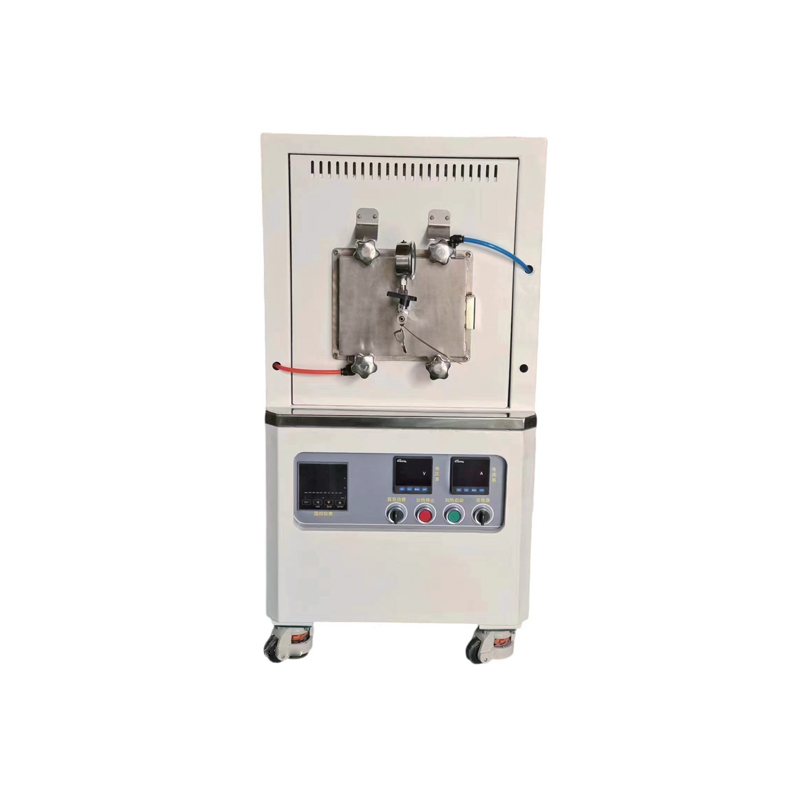
An atmosphere box furnace is a sealed chamber heating device engineered to perform thermal processing under a precisely controlled gaseous environment rather than in ambient air. The defining feature is not the heating elements or the insulation, but the gas-tight retort or sealed chamber that maintains a positive pressure of a specified process gas—hydrogen, nitrogen, argon, endothermic gas, or forming gas—to prevent oxidation, achieve specific surface chemistries, or remove contaminants during the thermal cycle. The primary applications span bright annealing of stainless steel, sintering of powder metal parts, brazing under a hydrogen atmosphere, carburizing and carbonitriding of low-carbon steels, and heat treatment of reactive metals like titanium that would catastrophically oxidize if heated in air. The critical selection parameters are the maximum operating temperature (which dictates the heating element and insulation type), the atmosphere compatibility of all internal components, and the integrity of the sealing system.
Content
Heating metal in ambient air causes two immediate and generally undesirable reactions: oxidation and decarburization. Oxidation forms a surface scale—iron oxide on steels, chromium oxide on stainless steel—that must be removed by pickling, grinding, or machining after heat treatment, wasting material and adding processing cost. Decarburization is more insidious: carbon atoms diffuse from the steel surface into the oxygen-rich atmosphere, creating a soft, carbon-depleted surface layer on a part that is supposed to be hardened. A component that measures the correct hardness in its core may fail prematurely because its surface is essentially a different, weaker material.
An atmosphere box furnace eliminates these problems by surrounding the workload with a gas mixture that is chemically neutral or reducing relative to the metal being processed. For steel, a reducing atmosphere of hydrogen or a hydrogen-nitrogen blend prevents oxidation and can actively reduce any pre-existing oxide films on the part surface. The oxygen partial pressure in a properly purged and flowing atmosphere furnace can be maintained below 10⁻²⁰ atmospheres at 1000°C, a level at which the formation of iron oxide is thermodynamically impossible. This is the fundamental physical chemistry that enables "bright" heat treatment—parts emerge from the furnace with a clean, metallic surface identical to their pre-processed appearance.
The physical architecture of an atmosphere box furnace falls into two primary design philosophies: the sealed retort design and the cold-wall vacuum-capable design. The retort design uses a fabricated alloy box—typically Inconel 600, 601, or a high-temperature stainless steel like 310 or 330—that sits inside the heated chamber and contains the process gas. The heating elements are external to the retort, operating in ambient air or a simple nitrogen blanket. This design is robust, cost-effective, and the standard choice for temperatures up to approximately 1150°C. Above this temperature, the creep strength of even the best nickel-based alloys becomes the limiting factor, and the design shifts to a vacuum-rated cold-wall chamber with internal heating elements and internal insulation that can be evacuated and backfilled with the process gas.
The choice of heating element material is governed by the maximum operating temperature and the atmosphere composition. A material that performs flawlessly in nitrogen may fail catastrophically in hydrogen at the same temperature due to hydrogen embrittlement or the formation of volatile hydrides.
| Element Material | Max Temperature in Air | Atmosphere Compatibility | Key Limitation |
|---|---|---|---|
| Kanthal A-1 (FeCrAl) | 1300°C | Air, nitrogen, argon; avoid hydrogen above 1150°C | Embrittles in hydrogen, alumina scale degrades |
| Nichrome (NiCr 80/20) | 1150°C | Air, nitrogen, endothermic gas, hydrogen (moderate temp) | Sulfur attack causes rapid failure |
| Molybdenum Disilicide (MoSi₂) | 1800°C | Air, nitrogen, argon; forming gas with caution | Forms volatile SiO in reducing atmospheres above 1300°C |
| Silicon Carbide (SiC) | 1550°C | Air, neutral atmospheres; avoid hydrogen | Reacts with hydrogen at high temperature |
| Graphite (Vacuum only) | 2200°C+ | Vacuum, inert gas; not oxidizing atmospheres | Rapid oxidation in air above 400°C |
A controlled atmosphere is not a static fill; it is a dynamic system that requires continuous management of gas flow, pressure, and purity. The furnace chamber must first be purged of ambient air before heating begins to prevent the formation of an explosive mixture if hydrogen or a combustible gas is used. The purge protocol typically requires a minimum of five to ten chamber volume exchanges with an inert gas—usually nitrogen or argon—before the reactive process gas is introduced and heating commences. For hydrogen atmospheres, the purge must continue until the oxygen concentration, measured by an in-line oxygen analyzer, falls below the lower explosive limit safety threshold, which for hydrogen is an oxygen concentration below 4% by volume.
During the heating cycle, a continuous flow of process gas is maintained. The flow rate is determined by the furnace chamber volume, the leak rate of the sealing system, and the acceptable level of atmosphere contamination. A typical flow rate for a laboratory-scale box furnace with a 10-liter chamber is in the range of 2 to 5 liters per minute, translating to a chamber volume turnover approximately every 2 to 5 minutes. Insufficient flow allows the buildup of outgassed contaminants—water vapor from the insulation, volatile organic compounds from residual oils on the workload, and oxygen from minor air leaks. A dew point sensor at the gas exhaust is the most direct method of monitoring atmosphere quality; for bright annealing of stainless steel, the dew point must be maintained below -40°C, corresponding to a water vapor content of less than 127 parts per million.
The choice of process atmosphere is determined by the metallurgical objective of the heat treatment. Each gas or gas mixture interacts differently with the metal surface at temperature, and selecting the wrong atmosphere can produce a defective part surface or even a safety hazard.
Any atmosphere box furnace operating with hydrogen, forming gas, or endothermic gas must incorporate multiple redundant safety systems. A hydrogen explosion inside a sealed furnace at 1000°C is a catastrophic event that can destroy the furnace and injure or kill personnel in the vicinity. The safety architecture is built on three independent layers of protection: gas management, ignition prevention, and structural containment.
The gas management system must include a burn-off flame or catalytic igniter at the furnace exhaust to safely combust any unreacted hydrogen exiting the chamber. The purge sequence must be interlocked with the heating controls so that the heating elements cannot be energized until the oxygen level is below the safe threshold. A flame arrestor in the gas supply line prevents a flame front from propagating back into the gas supply piping. The furnace must have a pressure relief panel or rupture disk designed to vent at a pressure significantly below the chamber's burst pressure, directing any explosion overpressure away from the operator position. Gas supply lines must have normally-closed solenoid valves that fail closed on loss of power, stopping gas flow immediately in the event of a power failure. Continuous monitoring with oxygen sensors, combustible gas detectors in the room, and a hard-wired emergency stop circuit that cuts all gas flow and heating power are the minimum acceptable safety specification for a hydrogen-capable atmosphere furnace.
The cleanliness of the workload entering an atmosphere box furnace directly determines the quality of the processed parts and the life of the furnace internals. Residual cutting oils, drawing lubricants, rust preventative coatings, and shop dirt vaporize at furnace temperatures and contaminate the atmosphere. The vaporized hydrocarbons crack on the heating elements and the retort walls, depositing carbon soot that reduces heating efficiency, changes the electrical resistance of the elements, and creates a carburizing environment in a process intended to be neutral. The carbon deposits also react with the chromium oxide passivation layer on the retort alloy, leading to carburization and embrittlement of the retort material.
An effective pre-cleaning protocol includes vapor degreasing with a non-chlorinated solvent, aqueous alkaline washing with hot rinse and forced-air drying, or vacuum baking to volatilize residues before the parts enter the process furnace. The parts must be handled with clean, lint-free gloves after cleaning; fingerprints deposited on a part before bright annealing will be visible as permanent etched marks on the finished surface. Fixturing materials must also be atmosphere-compatible. Carbon steel baskets will decarburize and contaminate a stainless steel workload. The fixturing must be made from the same alloy as the parts or a compatible higher-temperature alloy that does not introduce contaminants.
The quality of heat treatment is directly tied to the temperature uniformity within the furnace working zone. Aerospace and automotive heat treatment specifications, such as AMS 2750 (Pyrometry), define temperature uniformity survey (TUS) requirements that the furnace must meet to be qualified for production. A Class 2 furnace per AMS 2750 must maintain a temperature uniformity of ±6°C throughout the working zone at the qualified operating temperature. A Class 1 furnace tightens this to ±3°C.
The atmosphere inside the furnace contributes to temperature uniformity through convective heat transfer, which is absent in vacuum furnaces. Hydrogen, with its exceptionally high thermal conductivity, provides the best temperature uniformity. The gas circulation within a sealed box furnace is usually achieved by a high-temperature internal fan mounted in the furnace door or on the rear wall, driven by a shaft that penetrates the insulation and the gas seal through a rotary feedthrough. The fan circulates the atmosphere through and around the workload, reducing the temperature difference between the hottest and coldest points. The fan speed, the gas density, and the workload arrangement all influence the convective heat transfer coefficient, which for hydrogen at 1000°C can exceed 200 W/m²·K, compared to roughly 50-80 W/m²·K for nitrogen under the same conditions.
The gas-tight integrity of an atmosphere furnace degrades with every thermal cycle. The repeated expansion and contraction of the retort, the door seal, and the thermocouple and fan shaft feedthroughs creates wear paths for air ingress. A leak that is undetectable at room temperature can open to a significant pathway at 1000°C due to differential thermal expansion. The furnace should be leak-checked on a scheduled basis using a helium mass spectrometer leak detector or a pressure decay test. In a pressure decay test, the chamber is pressurized with nitrogen to a specified test pressure, isolated, and the pressure drop over a timed interval is measured. A leak rate exceeding the manufacturer's specification—typically 1 to 5 millibar per hour for a laboratory retort furnace—indicates that the door seal, the shaft seals, or the retort itself requires service.
The retort is a consumable component with a finite service life. The primary wear mechanisms are oxidation of the outer surface from air exposure at temperature, carburization from contaminated atmospheres, and thermal fatigue from the cyclic heating and cooling. A Type 310 stainless steel retort operating at 1050°C in hydrogen service may last 3,000 to 5,000 cycles before developing leaks at the weld seams or exhibiting excessive distortion. An Inconel 600 retort under the same conditions can last 8,000 to 12,000 cycles but costs significantly more. Retort replacement should be planned as a scheduled maintenance event, not a reactive repair, because a sudden retort failure mid-cycle ruins the workload and can damage the heating elements and insulation through exposure to process gas.
Introduction: Aluminum silicate fiberboard material is currently a high-performance insulation material. Aluminum silicate fiberboard has excellent properties such as light w...
Introduction: Aluminum silicate refractory fiber products are made by selective processing of pyroxene, high-temperature melting, blow molding into fibers, solidification mol...
Introduction: 1、 Shaped ceramic fiber furnace lining for high alumina ceramic fiber board The shaped ceramic fiber furnace lining of high alumina ceramic fiber board mai...

An enterprise integrating design, R&D, production, sales and engineering services. Ceramic Fiber Board Manufacturers, Vacuum Heat Treatment Solutions in China
Phone: +86-13967261180
+86-17858398898
Email: ncjt@zjncjt.com
Arlen@zjncjt.com
Tel: +86-572-8295956
Add: Wulintou, Tangbei Village, Leidian Town, Deqing Country, Huzhou City, Zhejiang Province, China
Copyright © 2024 Zhejiang Nengcheng Crystal Fiber Co., Ltd. All Rights Reserved.

 English
 Español
 عربى
عربى